
Why Is Society Divided into Rich and Poor People?
This is a question I have pondered and tried to answer for a long time, drawing from academic literature, observing research experiments, and reading various debates on social networks.
I don't think this article will provide a 100% definitive answer to the question in the title. However, I will synthesize the arguments that I find most logical for everyone to reflect on. More importantly, it aims to offer perspectives to answer a much more practical and better question:
If we do not start out wealthy, how can we become wealthier?
Now, let's explore the roots of wealth inequality together.
1. How Did the Rich and the Poor Emerge?
Throughout the course of history, there have been periods when the wealth of most people was roughly equal—usually following revolutions, wars, pandemics, or even during specific eras like primitive societies where all tribe members shared scarce hunted food and resources to survive. In those periods, individual capital accumulation was close to zero due to resource scarcity, destruction, or redistribution; thus, everyone's wealth was approximately equal. So, why is it that after some time following those periods, certain individuals become wealthier while others become poorer?
Here are the two arguments that I find most logical:
a. Acuteness and a Venturesome Mindset
Starting from the same baseline, everyone sees the same set of facts, but acute individuals spot patterns and trends. While others only see scattered and chaotic fragments, the acute mind perceives the big picture of the future. This intelligence helps the acute group identify opportunities that bring value to themselves while calculating and filtering vague risks, turning them into quantifiable ones.

Recognizing an opportunity is only a necessary condition; having a venturesome mindset is the sufficient one. The biggest point of divergence occurs when humans stand on the brink of uncertainty:
The hesitant choose the comfort zone because their fear of loss outweighs their desire to gain.
The ambitious choose to venture out because they understand that they will have the chance to reap massive rewards if they plunge into uncertainty.
The decisive, venturesome group seizes the opportunity while others are still busy deliberating and waiting for an absolute guarantee—something that simply does not exist in this world. Although success is never 100% guaranteed, taking courageous action fundamentally creates a higher success rate than just watching opportunities slip away without doing anything.
There are two very insightful experiments you can refer to:
-
Wealth Distribution based on Game Theory by Goldratt Research Labs
-
Wealth Distribution based on Statistical Physics by a research team from the University of Science and Technology of China
The results of both simulations indicate that even if everyone in the experiment starts with an equal amount of resources and engages in transactions with equal win/loss probabilities, the resources will ultimately follow the Pareto Distribution (The 80/20 Rule) . This means about 20% of the individuals who are acute, decisive, or lucky will quickly accumulate up to 80% of the total resources, while the remaining majority gradually slides into poverty.
In my opinion, these are two factors that humans can control by deciding their own destiny through capability, decisiveness, and courage .
b. Luck and Initial Advantages
In science, this is called Path Dependence —a tiny, chance-driven push at the starting line can alter the entire trajectory of a life in a completely different direction.
Imagine two farmers with identical capabilities and diligence. In the first year, Farmer A unfortunately suffers a complete crop failure due to a passing storm (natural disaster), while Farmer B luckily escapes because his field is nestled next to a mountain that blocks the wind and storm. The difference here does not lie in mindset, but purely in the random probability of nature.
From this point onward, Farmer B (the lucky one) makes a profit in the first year. He uses that money to upgrade to better farming tools and buy superior seeds. In the second year, even if the weather turns slightly worse, he remains safe because he has good tools for protection.
Farmer A (the unlucky one) loses everything in the first year. He has to take on debt to buy cheaper, lower-quality seeds and cannot afford to upgrade his tools. In the second year, even if the weather is beautiful, his yield remains poor due to bad seeds and inferior tools.
The snowball effect kicks in. After 10 years, Farmer B becomes a wealthy landlord, while Farmer A becomes a poor peasant standing on the edge of bankruptcy. This colossal gap originally stemmed from a single random storm in the very first year.
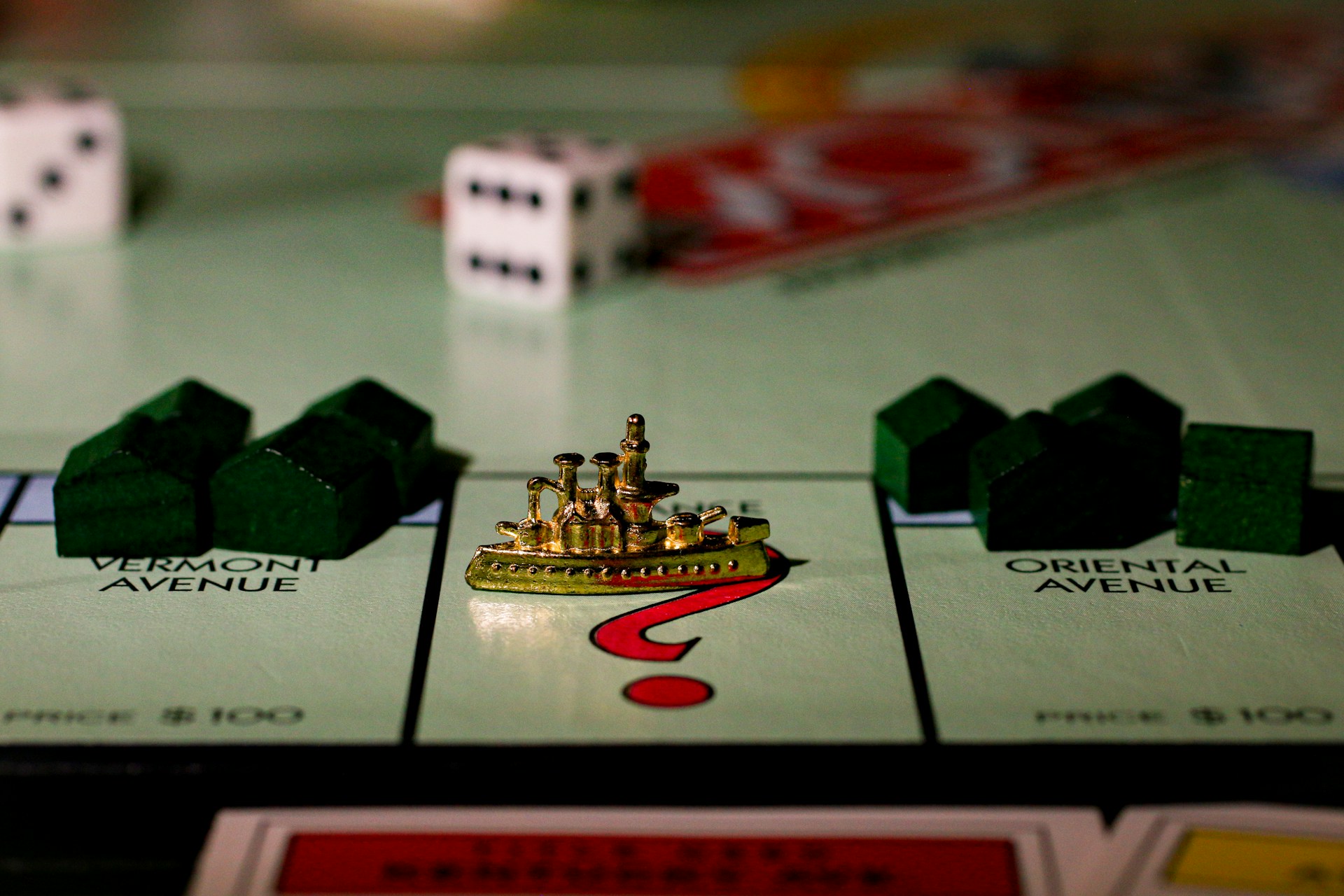
In my opinion, luck (often referred to as destiny) is a heavily external factor that humans cannot control . It may sound unfair, but luck is actually the biggest catalyst creating the wealth gap, stretching right from the early stages of social asset differentiation.
2. Why Do the Rich Get Richer and the Poor Get Poorer?
When we shift the question from "Why does society differentiate between rich and poor?" to "Why is this gap continuously widening?", we move from finding the initial causes to analyzing how the financial, economic, and social systems operate.
If personal acuteness or a bit of luck plays a decisive role in the early stages, then in the later stages, the nature of social structure, the financial system, and the economy are what propel the rich upward faster and hold the poor down deeper.
Here are the two most generalized arguments to explain this phenomenon:
a. Resource Asymmetry
Resources here do not just refer to tangible assets. In society, resources also exist in the form of three invisible capitals that have the power to shape destiny:
Social Capital (Relationships)
Data Capital (Exclusive Information)
Cultural Capital (Education & Mindset)
At the higher tiers of the wealth pyramid, information is no longer the free articles found online—in reality, those are just tools used by the elite to guide public opinion. The rich often access "first-tier" information—meaning original, early, and practically oriented data. When combined with quality relationships, they form economic alliances. A piece of advice from an industry expert or a strategic planner at a dinner party can be worth an entire year of someone else's labor. The rich use wealth to buy status, and status automatically attracts quality information and connections to them.

We have all probably heard of certain conferences or forums with entry tickets costing from a few thousand to tens of thousands of dollars, or even restricted to invitation-only attendees. To the poor, this is an exorbitant price, but to the rich, it is a reasonable fee to access exclusive relationships and insights. The ticket price to these forums is the easiest visualization of the wall separating the rich and the poor in accessing quality networks and information.
Furthermore, the children of the wealthy are typically placed in an educational environment that teaches not just knowledge, but a leadership mindset. They are guided directly by the real-world case studies of their parents and surrounding networks. Most importantly, these young people enjoy peace of mind. Since they do not have to split their mental bandwidth over trivial worries like rent, food, or medical bills, they can devote 100% of their energy to experimenting, learning, and even embracing mistakes to start over. Having surplus resources to freely test various strategies provides them with many practical insights into how the world works—which directly influences their ability to capture new opportunities and accumulate more wealth.
Conversely, the poor are trapped in the Scarcity Trap. The daily pressure of earning a living erodes their mental energy, leaving them with no capacity to think about 5-year or 10-year plans. Their children start with a massive void in both mindset and supporting networks. This lack of information and resources makes the poor more hesitant and afraid to take risks to seize opportunities, even when they appear clearly right in front of them. This psychology is entirely understandable because if the poor choose to act and fail, they will lose too much to ever recover their initial position to try again, or they might not get another chance at all.
b. The Compound Interest Effect
While resource asymmetry acts as the "fuel," the compound interest effect serves as the "engine." When a massive amount of fuel is fed into an engine operating exponentially, the wealth gap stretches at a staggering speed.
Usually, when mentioning compound interest, people think of financial figures. However, compound interest does not only operate in finance; it works across all types of resources listed in the previous section. The key point here is that the initial scale determines the acceleration of future growth —meaning that for compound interest to unleash its massive power, it requires a sufficiently large baseline of original resources.
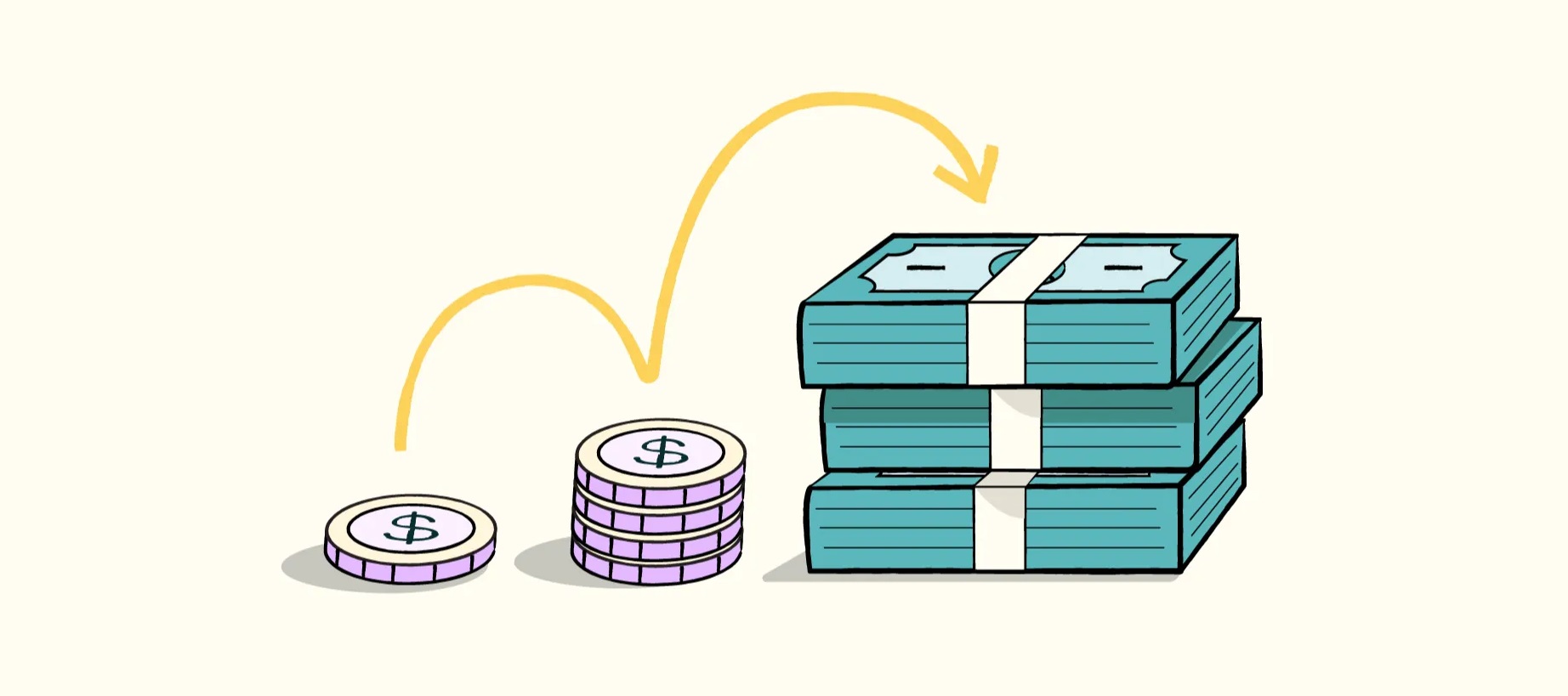
Suppose a wealthy person owns 1 million dollars in surplus assets and invests it at a 10%/year return rate; each year, he will have an additional 100,000 dollars—an amount sufficient to buy many new assets. This money then continues to generate money exponentially. It is a positive feedback loop.
Meanwhile, a poor person only accumulates 10,000 dollars after deducting the expensive costs of living. With the same 10% rate, he only gains an additional 1,000 dollars. This amount is easily swallowed by inflation or a small life emergency. Compound interest on such a small capital base is virtually negligible.
Similarly:
One quality relationship can spawn three other quality relationships → that is compound interest in social capital.
Understanding a new technology doubles the ability to learn the next technology faster → that is compound interest in education.
The wealthier and more successful someone is, the easier it is to borrow bank funds at low interest rates and raise capital from other investors → that is compound interest in reputation.
While the assets of the rich grow along an exponential curve (non-linear) thanks to compound interest, the income of the poor—which relies purely on time and physical labor—usually only grows linearly, or even plateaus or declines as health deteriorates.
Therefore, once the rich have a large enough resource base, the compound interest effect helps them grow their wealth much faster than the impact of compound interest on the small resource base of the poor. This is the technical factor causing the wealth gap to widen further and faster.
3. How Can We Become Wealthier Ourselves?
Thus, we understand why there are rich and poor people in this world, as well as why the wealth gap keeps widening. Now, we will answer a question directly related to ourselves:
So, if one comes from an ordinary family, is there a way to escape this systemic loop—where both "Resource Asymmetry" and "The Compound Interest Effect" are working against us?
The answer is yes, and that is precisely why I spent time researching and writing this series on personal finance .
A little digression on why I created this personal finance series ☺️. First, I must admit that I feel very lucky to be born into a whole, loving family and to grow up in a peaceful country. Nevertheless, my family was not wealthy or part of the elite, so there were times we experienced difficulties that almost any middle-class family has gone through, such as:
There was a time my maternal grandfather suffered an acute gout flare-up in his leg and had to be hospitalized. Wanting to save money, he used public health insurance. Although it saved some money, the insurance approval procedures back then were highly complex, and my grandfather had to drag his swollen, painful leg across various counters to get checked and complete the paperwork.
-
When I was a child, there were times I wanted to eat a certain dish or buy a toy, and my parents would refuse for rather amusing reasons like "trust me, this doesn't taste good" or "trust me, the plastic in this toy is toxic, it's not good" (I used to throw tantrums and cry rollingly 🤭). Growing up later, hearing stories people reminisced about the old days, I realized it wasn't that my parents didn't want to give them to me, but because... back then they were just starting their careers and had no money (now they have more than enough to buy them, but I no longer desire those things 😂).
...and many other similar stories...
From observing and feeling what my loved ones went through, my sole desire is to strive to achieve a state of financial freedom to:
Provide myself and those around me with a more comfortable life.
Gain the freedom to spend maximum time pursuing my dreams (since everyone's lifespan on this earth is finite).
Hence, I decided to cultivate knowledge about personal finance and share the insights and experiences I have gathered in this finance series. It serves as a place where I can store and review knowledge when needed, and as a resource for those who share my goal to equip themselves with the essential basic financial knowledge to "escape poverty."
Before you read other articles in my finance series , here are the core ideas used throughout the writings. These ideas might not instantly elevate you to the elite class, but they will partly alter your own financial destiny.
a. Increasing Personal Value
If the rich build wealth by using money to leverage money, the poor must start from the very root:
Use Knowledge, Skills, and Mindset to generate value.
Become an excellent problem solver to "symbiose" with the rich.
Venture into opportunities with limited risks but unlimited returns.
I will explain each step thoroughly. First, because we do not have tangible resources readily available (money, family launchpad, connections), we must focus maximally on exploiting the invisible resource with the lowest cost of access: Knowledge.
According to my research, throughout historical periods, the wealthy class has always tried to obstruct lower classes from accessing knowledge. The reason is that they fear if people from below acquire the same knowledge, they will compete directly with them. Here are a few examples for you to visualize (you can also search the keyword "Elite monopoly of knowledge" on Google to learn more):
In previous eras, knowledge was monopolized within the aristocracy by banning lower classes from accessing books, or by using another barrier—language. That is, documents on law, philosophy, and science were all written in a language (like Latin) that only the nobility were taught.
-
Moving into the 21st century with the explosion of the Internet, knowledge has become more democratically shared, so the elite employ methods such as Academic Paywalls (the poor are not banned from learning, but they lack the funds to study in environments with access to high-quality knowledge sources) or Information Blurring (causing addiction and distracting attention via social media platforms, making the majority focus on useless viral trends instead of beneficial knowledge).

Therefore, the first thing is that we must soberly determine two things:
-
Which Knowledge/Skills are important to learn
-
Where to find affordable sources to learn those Knowledge/Skills
Secondly, the poor cannot step into high society with money, but they can enter by creating value (from the knowledge and skills learned). By becoming an excellent problem solver (an acute assistant, a highly skilled artisan, a useful solution developer), ordinary individuals who deliver value earn the trust of the upper class. This is the shortest path to access relationships, exclusive information, and learn the mindset of the upper class.
Finally, persistently creating value will help us accumulate a small amount of capital. However, that will still be a modest amount to sustain failures, so we cannot gamble in an "all-or-nothing" fashion. We must actively seek out and only venture into opportunities with limited risks but unlimited returns. For instance, we can spend 6 months of evenings building a digital content channel, a software application, or studying for an international certificate; if we fail, we only lose time; but if we succeed, it opens a turning point that completely transforms our financial standing.
b. Capital Accumulation and Activating Compound Interest from the Smallest Scale
According to Karl Marx, capital accumulation is the process of converting a portion of surplus value into additional capital for expanded reproduction. Instead of consuming it personally, the capitalist uses the profits obtained to purchase more means of production and hire more labor to continue generating more surplus value.

As I explained in the section on the compound interest effect , the initial capital scale determines the speed of asset growth. Therefore, if we want our total assets to surge rapidly, we need to save as much money as possible and invest that money or enhance our own value to generate more income.
To achieve this, we must equip ourselves with two things:
-
Knowledge of Personal Finance → This knowledge will help you increase your assets through proper investment and managing income and expenditures reasonably. You can refer to this knowledge through the articles on finance that I write .
-
Iron Discipline → This is the prerequisite condition to maintain healthy financial habits, keeping the cash flow stable and creating an environment for compound interest to take effect.
Here are some actions we can take:
Adopt a minimalist lifestyle – This lifestyle aims to cut down items, relationships, tasks, etc., that do not bring value → Reduces expenses + Frees the brain from redundant worries → Grants time and energy to focus on what truly brings value.
Manage time to upgrade personal value – Stop the loop of the poor, which is selling time + health for money → Accept a slight income reduction to spend time learning things that generate greater value.
Manage relationships – Eliminate negative relationships + useless gatherings → Saves money and provides time to learn value-generating things.
...
Since this article has grown quite long, I will explain each implementation step in detail in subsequent finance articles !
Bottom Lines
In summary, through the information I have spent time researching, I have drawn the following key takeaways:
-
The rich and the poor emerged because certain groups of people possessed more acuteness, willingness to venture out , and luck than others.
-
The gap between the rich and the poor is continuously widening because the wealthy enjoy advantages in resource asymmetry (assets, relationships, information, education, etc.) and leverage the compound interest effect —all of which are consequences of how the modern financial, economic, and social systems operate.
-
If we are ordinary people wishing to become wealthier, we must forge an iron discipline to continuously increase our personal value to narrow class disadvantages and capital accumulation + leverage the power of compound interest to grow assets from the smallest scale.
If you are also someone who wants to change your financial destiny, or simply wish to develop yourself and manage money better, please check out my articles on personal finance and personal development !
→ Read the next article: What is financial freedom?
Thank you for reading my article!
Kim,