
Principles of Smart Consumption
We are living in an era where consuming has become easier than ever:
-
With e-commerce platforms and personal shopping services, a single tap on a smartphone screen allows virtually any item from anywhere in the world to arrive at your doorstep by the next day.
-
With the explosion of consumer debt options like "Buy Now, Pay Later" (BNPL) or credit cards, the line between actual financial capability and fleeting desires has blurred, making the ownership of items beyond our reach feel more obvious than ever.
However, behind all that convenience lies an invisible trap called Lifestyle Inflation .
Today's consumer economy surrounds us with retargeting ad algorithms, "fake" discount events, and psychological manipulation campaigns from major corporations and social media "flexing" KOLs. They don't just sell products; they are selling us unreasonable living standards, instilling the fear of missing out (FOMO) to turn shopping into a hard-to-break addiction. As our income increases, we tend to automatically upgrade our living standards: moving from street-side coffee to expensive Starbucks or Koi Thé cups, from basic needs to luxury experiences, or from well-functioning items to gadgets bloated with unnecessary features...
The consequence is that no matter how much your salary increases, your bank balance stays stagnant—or even dips into the red. Lifestyle inflation not only erodes your ability to accumulate savings but also traps you in a continuous loop of financial pressure, working tirelessly just to maintain items you probably never truly needed in the first place.
This article does not aim to advise you to live an austere life, but rather to share smart shopping principles that help you regain control over your purchasing behavior and build a sustainable financial foundation amidst a world full of temptations.
1. The 72-Hour Rule
This is a very easy rule to implement that I apply regularly. The approach is simple: whenever an urge to buy an item arises, write down its name or add it to a wishlist, then wait at least 3 days (72 hours) before deciding whether to buy it or not (for high-value items, extend the waiting period to 30 days) .
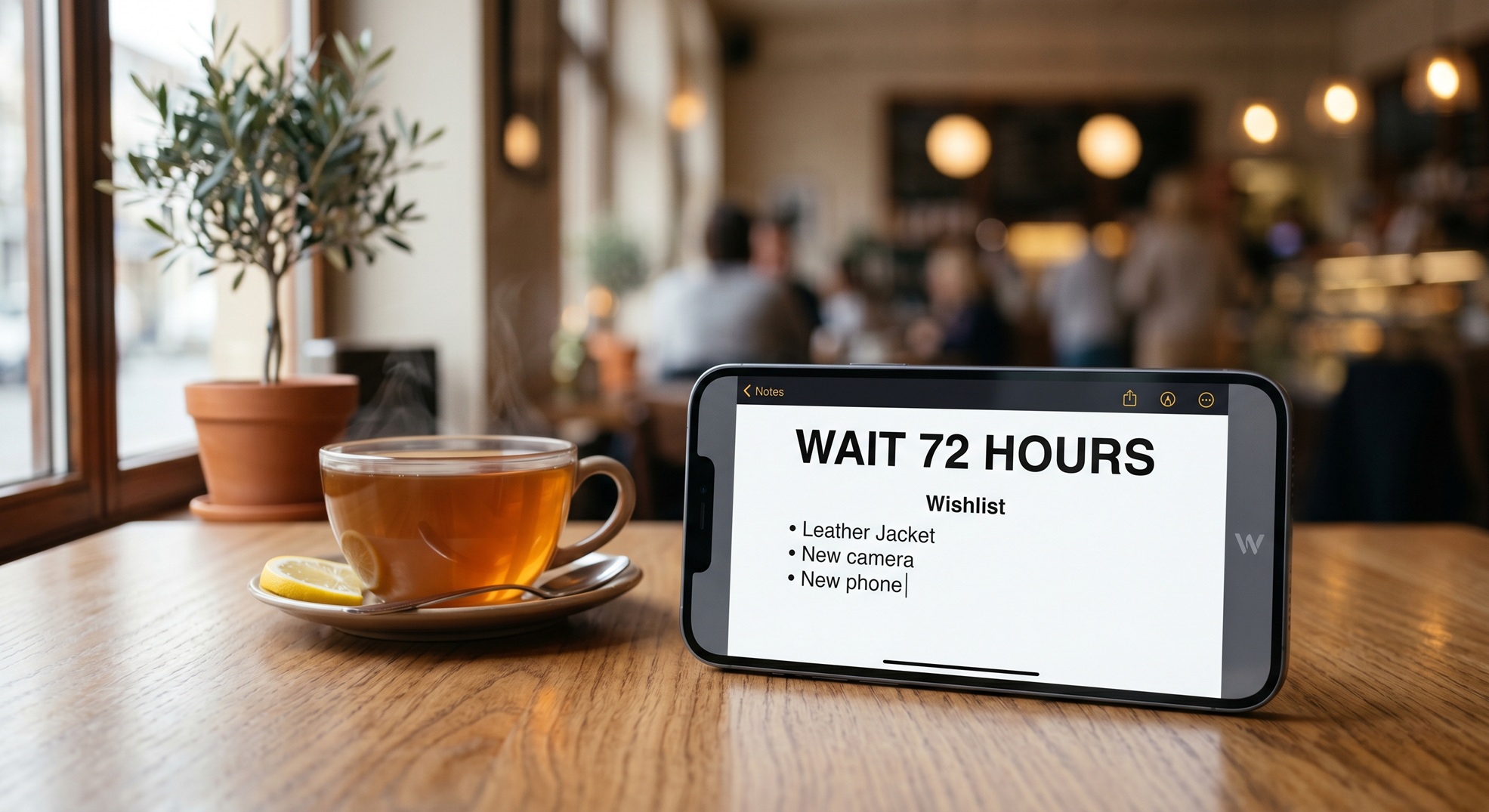
When we see a novel, beautiful, or deeply discounted product, our brain releases Dopamine—a neurotransmitter that induces excitement and urgency. At this point, Dopamine makes us focus entirely on immediate benefits (the thrill of owning the item) while ignoring long-term consequences (like running out of money or cluttering the house). Emotion completely overrides rational thinking, making decision-making unwise.
Therefore, waiting for a period of time before taking action allows Dopamine levels to return to baseline, letting the excitement cool down so we can evaluate the item with a more realistic and rational mindset.
2. Distinguish Clearly Between "Needs" and "Wants"
Surely, all of us have at some point bought items that hold no real value to us simply out of a sudden desire to own them:
-
Buying thick books or novels that are never read, just to possess the image of an intellectual person or the comforting feeling of having knowledge within reach, even though every evening is actually spent scrolling on a phone.
-
Upgrading a phone just because of advertisements highlighting "100x zoom camera", "titanium casing", or an "appearance that flexes wealth", when you never use those features and your old phone still works perfectly fine.
-
Buying a dress worth an entire month's salary just to wear it for a few hours at a wedding, only to let it sit permanently in your closet afterwards.
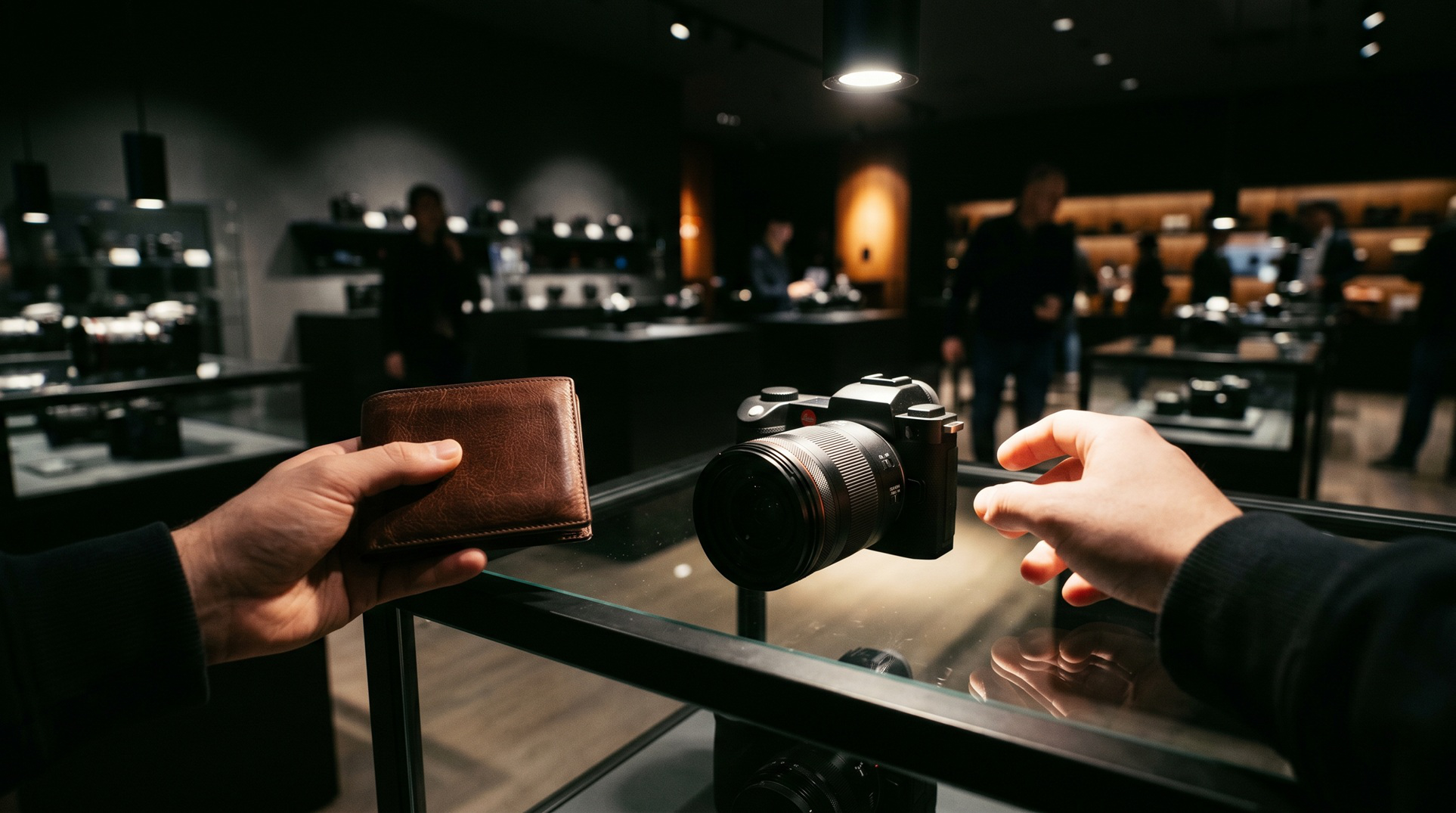
It is precisely this trap of lifestyle inflation that leads us to a state where possessions pile up high, yet we constantly feel something is missing. When we actually need useful tools for work, we can't find anything helpful. Meanwhile, our wallet grows thinner and fragile. At this point, your money is "dead" tied up in items that depreciate over time.
Therefore, clearly defining what you need versus what you want is a mindset we must cultivate to control lifestyle inflation :
-
Needs : Essentials for survival and work (food, rent, professional tools).
-
Wants : Things that upgrade your experience or satisfy psychological impulses (one-time fancy clothes, dining at luxury restaurants...).
To help you make smarter purchasing decisions, I will share 3 actions I usually take before deciding on any purchase:
a. Create a Shopping Checklist Criteria
First, to avoid purchasing items that are unsuitable for yourself, take time to reflect and list out shopping criteria, and only decide to buy when the item satisfies most of those criteria .
Below is an example of 3 criteria in my shopping checklist for your reference:
-
Functionality : Does it solve a practical personal problem?
-
Personal Preference : Do I genuinely like the style/design, or am I buying it just because it's "trending"?
-
Usage Context : Does my current environment/lifestyle allow me to use this item frequently? List at least 3 specific situations.
If possible, try before you buy to experience the practical features as well as your feelings toward the product before spending money.
b. Determine a Monthly Shopping Budget
Lifestyle inflation is a personal economic phenomenon where an individual's living expenses increase proportionally (or faster) with income growth.
I am not suggesting that we must maintain an "austere" standard of living after earning a significantly higher income through improved skills and value. However, raising your standard of living shouldn't mean spending 3 times more when your income doubles; rather, when your income increases, try to keep spending on "Needs" stable and allocate only a small percentage of the additional income to "Wants" .
This way, you can still enjoy the fruits of your labor based on your performance while keeping discipline to safeguard your financial health from impulsive desires.
c. Maintain an Inventory Table of Owned and Planned Items
Finally, as someone pursuing minimalism, I regularly maintain an Excel spreadsheet tracking every single item I own. By that, I mean literally every single item, from the smallest/cheapest items like toothbrushes and soap to larger/expensive items like laptops and motorcycles.
Below is an illustration of my inventory tracking table:

This is an exercise that requires us to review everything we own, evaluate them, and record the characteristics of each item. In my personal experience, although time-consuming, this action offers an extremely detailed perspective on my own spending habits:
-
Which items are used frequently?
-
Which items are rarely used and poorly suited for me?
-
What is the function of each item? If it breaks, is it necessary to buy a replacement? If yes, what features must the new item have to fit my actual needs?
3. Calculate the Value of the Item You Want to Buy
Have you ever bought an item at a cheap price thinking it was a great bargain, only for reality to prove otherwise?
-
Snagging a shirt on sale via TikTok, only to find the fabric stuffy when wearing it, wearing it once and stuffing it into the closet forever. This is an example of buying cheap (or discounted) items that are rarely used ➝ In reality, it turns out to be extremely expensive relative to actual utility (poor Price/Performance) .
-
Instead of buying an official or reputable third-party charging cable at a higher price, opting for a nameless cheap cable from a small accessory shop; after 3 weeks of use, the wire breaks internally; stubbornly buying another cheap cable; the low-quality cable ends up damaging both the charger and phone battery. The repair cost and new cable purchase end up costing several times more than the original official cable. This is an example of buying cheap items for heavy everyday use ➝ However, cheap items are often low quality and break quickly ➝ Requiring repeated purchases ➝ Total cost becomes extremely expensive .
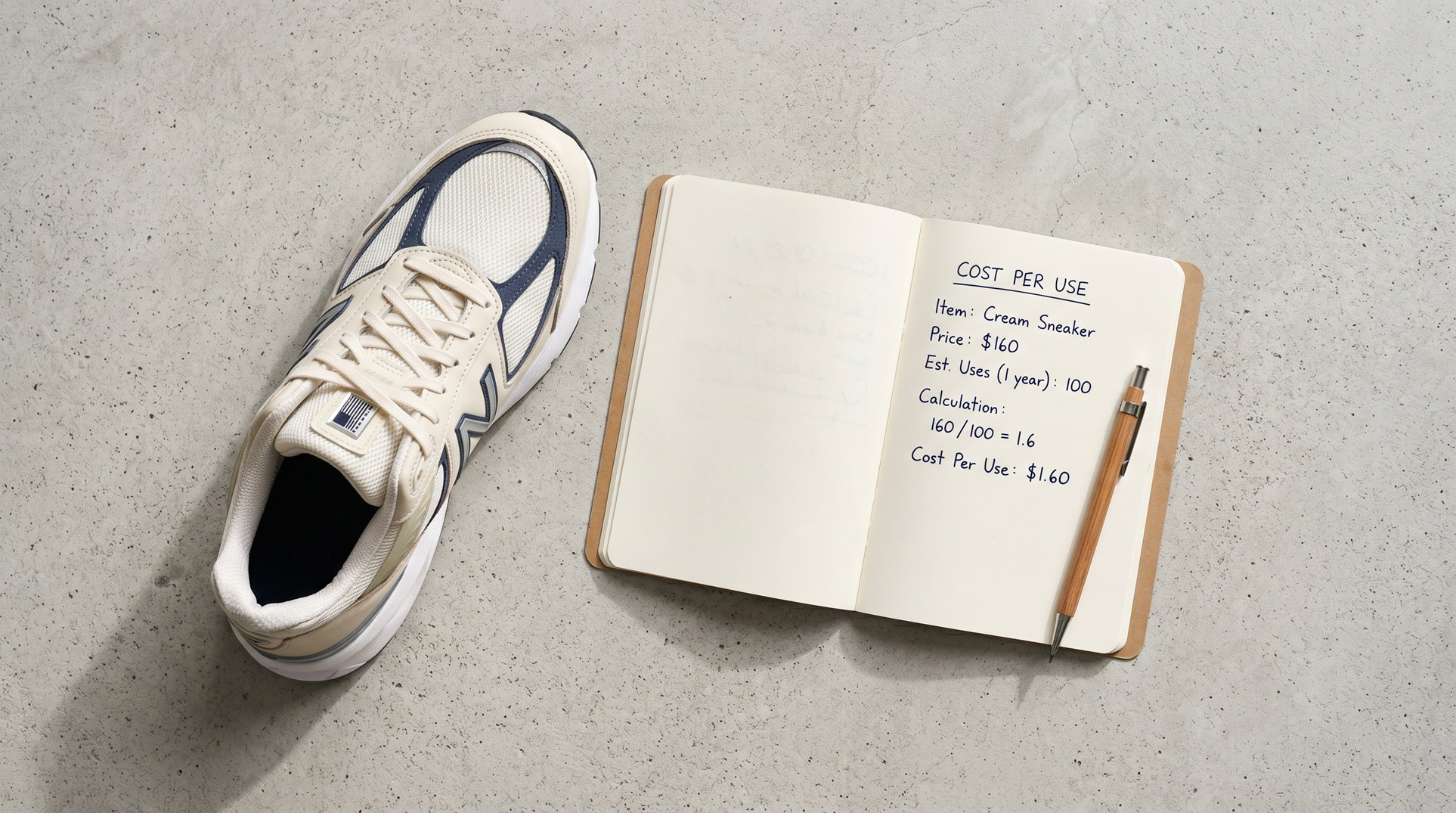
To avoid buying items whose value does not match the money spent, we need to determine the true value the item brings to us. And to determine the true value of an item, don't just look at the price tag; calculate the actual value based on frequency or duration of use .
Actual Value by Frequency of Use = Price / Expected Number of Uses
Example : A high-quality suit priced at $77 expected to be suitable for 20 events (cost per use = $77 / 20 = $3.85/use) is cheaper than a $11.50 jacket suitable for only 1 event (cost per use = $11.50 / 1 = $11.50/use).
Actual Value by Duration of Use = Price / Expected Lifespan
Example : Laptop A with older specs costing $577 with an expected lifespan of 2 years (cost per year = $577 / 2 = $288.50/year) is more expensive than Laptop B with newer specs costing $1,538 with an expected lifespan of 8 years (cost per year = $1,538 / 8 = $192.25/year).
Bottom Lines
Smart consumption has never been about stinginess or forcing oneself to live an austere life. On the contrary, it is about reclaiming personal freedom—no longer manipulated by advertising algorithms, no longer defined by luxury items "flexed" on social media, and fully mastering your own cash flow.
Ultimately, money is an equivalent measure of time and effort spent working. Instead of trading hours of hard work for a few fleeting minutes of Dopamine excitement, use it to build a solid financial foundation, buy peace of mind, and invest in long-term sustainable values.
To avoid becoming a "slave" to the very items you own, your consumer mindset should be reshaped starting today through 3 core actions:
-
Delay Gratification : Strictly apply the 72-hour rule to let Dopamine drop back to baseline before spending money.
-
Visual Management : Clearly distinguish between "Needs" and "Wants" using criteria checklists and personal asset inventory tables.
-
Focus on Performance (P/P) : Stop looking solely at the price tag; calculate cost per use or expected lifespan to find the true value of an item.
Smart shopping is not an instinct; it is a skill that takes time to cultivate. Start by taking time to reflect and evaluate the items you currently own as well as those you plan to buy. Ask yourself whether that item actually brings real value to you or if it's merely a shell to fill a temporary emotional void.
Although this skill requires time to master, trust me: whether the money in your wallet thickens or thins out is determined by the smallest choices you make today.
➝ Continue reading: How to Use Credit Cards Wisely to upgrade your spending workflow and turn spending into credit-building opportunities!
Thank you for reading my article!
Kim,
15/05/2026