How to Have a Successful Career?
By studying the career growth of successful people in various fields, I have synthesized several common traits that we can learn from them.
These insights were drawn by repeatedly asking the question "How" to understand the choices successful people make on their career paths.
1. What Is a Successful Career?
Usually, when evaluating a successful career, we often compare the power and wealth a person possesses. This is not wrong, but it is incomplete. In my opinion, a successful career is one where we achieve two criteria:
Creating value for society and gaining social recognition (building impact, solving problems, etc.)
Satisfying personal desires (financial wealth, passions, opportunities for skill development, etc.)
In reality, it is easy to observe that most successful people are those who deliver immense value or make a profound impact on society.
2. How to Have a Successful Career?
There is an undeniable truth that all successful people possess exceptional skill sets in their respective fields. Let's look at a few examples:
Bill Gates (Microsoft), Sundar Pichai (Google), Elon Musk (Tesla & SpaceX), etc., are experts in technology.
Warren Buffett, Charlie Munger, Ray Dalio, etc., are experts in law and finance.
Top billionaires in Vietnam such as Pham Nhat Vuong (Vingroup), Le Viet Lam (Sun Group), etc., are experts in business, workforce management, and possess the deepest understanding of how the Vietnamese economy operates.
Therefore, to have a successful career, we must become an expert in a specific field .
Realistically speaking, we do not need to be among the top elite experts. Simply being an average expert in the industry who skillfully uses the required skill set of our domain is enough to create (relatively large) value for society.
And of course, if we are ambitious to lead, constantly striving to tackle society's most pressing problems and creating tremendous value, the rewards society gives us will be correspondingly greater.
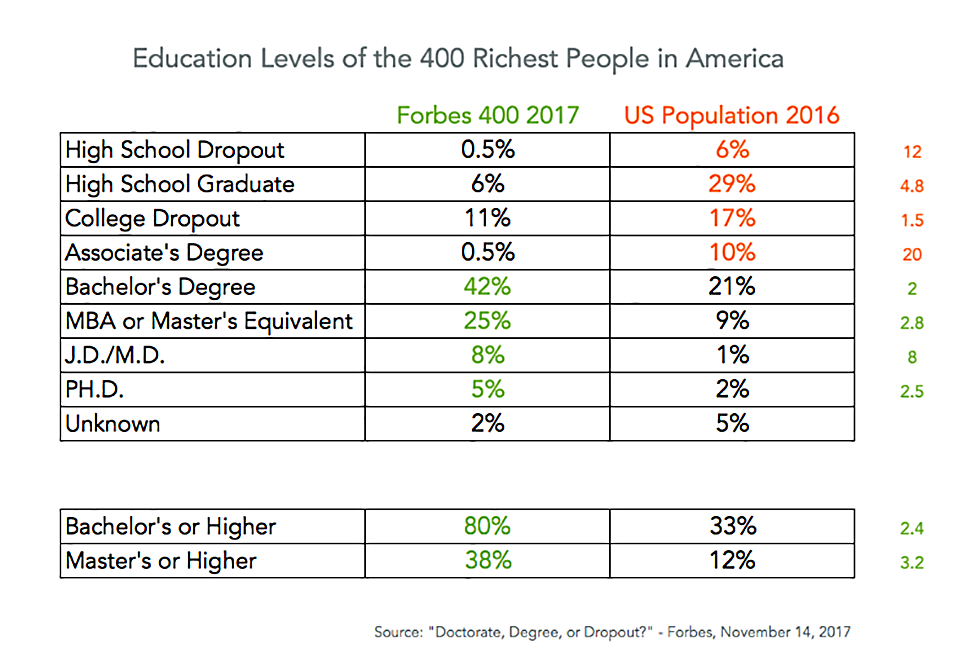
The world's most successful people are those who create the most value and impact for society.
3. How to Become an Expert in a Field?
Thus, we know that to have a successful career, we must become an expert in a field. So how do we become an expert in our field?
Let's continue dissecting the most successful role models:
Bill Gates started computer programming at age 13, and throughout his journey building Microsoft, he continuously honed the latest tech trends related to the Windows operating system and software within his product ecosystem.
Warren Buffett began investing at just 11 years old, and today (in 2024) at 93, he still reads daily to enhance knowledge supporting his investment methodology.
Elon Musk eagerly jumped into learning the most challenging concepts—from automotive engineering to rockets and spacecraft—from books, colleagues, and top professors throughout his time studying, starting up, and leading his tech companies.
Cristiano Ronaldo did not become a world-class footballer by chance; he trained relentlessly every day with extraordinarily tough regimes throughout his 30-year career.
The "Eastern European tycoons" in Vietnam started doing business when they were 20-year-old students in Ukraine, the Soviet Union, East Germany... and today, as top business magnates in Vietnam, they continue to discover new business directions for their enterprises.
We can see the common denominator among these individuals is that they became successful in their fields by dedicating vast amounts of time and effort to learning and self-development. It is through this persistence that they embody the 3 elements that form an expert: knowledge, experience, and practical exposure .

Research by psychologist Anders Ericsson revealed that talented violinists practiced an average of 10,000 hours before reaching a professional level.
Thus, the only way to become an expert in a field is to dedicate time, effort, and perseverance to learn, cultivate, and practice the skills required by that field .
Of course, we cannot ignore two additional factors that set exceptionally successful people apart: innate talent and luck . However, I believe these are merely leverage factors that help an individual achieve success faster. The most crucial factor remains persevering and putting in the effort to hone oneself.
"I never knew an early-rising, hard-working, prudent man, careful of his earnings and strictly honest, who complained of hard luck." - Joseph Addison
4. How to Stay Persistent and Motivated in the Long Run?
Surely there was a time in your life when you had to pause your journey because you were too exhausted and lacked the motivation to keep going. Motivation is a vital factor in helping us overcome obstacles and reach our final destination.
On the journey of self-refinement to become an expert in a field, there will be times when obstacles block our path. These hurdles will make us discouraged, drain our energy, and even question our own choices. Only by setting clear goals paired with an intense desire to achieve them can we generate the motivation to push through such tough periods.
Every successful person has gone through difficult times. In fact, they have likely experienced more failures and endured more pain than anyone else. Yet when observing these individuals, we see a common trait: many highly successful people continue to work even after achieving wealth, success, and reaching an advanced age:
Warren Buffett still reads financial reports and hunts for investment deals daily (a task requiring immense mental effort) despite being a billionaire, at an advanced age, and having survived numerous lawsuits and corporate control battles.
Bill Gates still attends weekly leadership meetings at Microsoft to craft growth strategies for the corporation, despite seemingly having it all. Furthermore, he directly engages in philanthropic projects, knowing he might put himself in demanding and risky situations.
Closer to home, many successful leaders in Vietnam continue working every day despite being wealthy and elderly, such as Ms. Mai Kieu Lien (Vinamilk), Mr. Tran Dinh Long (Hoa Phat), Ms. Nguyen Thi Mai Thanh (REE), etc. They all navigated career-building phases that could not have been harder in a country half a century post-peace and under long-standing economic sanctions.
So what keeps them motivated to work like that? — It is because they truly love what they do every day. They feel happy and meaningful when working, rather than viewing it as an obligation. It goes far beyond the financial rewards their work can bring.

From this, we can conclude that to maintain enthusiasm and motivation to push forward in a field, it must be a field we truly love . Only passion gives us the drive to spend the majority of our time on it and overcome difficult moments.
Bottom lines
To summarize, to have a successful career, we must:
-
Find a field that we are truly passionate about
-
Leverage our passion for work to fuel perseverance in developing ourselves within that field
-
Dedicate enough time to master skills in our domain (becoming an expert), and success will naturally follow
I hope that through the perspective shared in this article, we can make wise choices in selecting the field to develop our careers.
*In this article, I have only highlighted examples of individuals with remarkably extraordinary career success. However, I have also observed many people around me with solid, above-average career success, and they share the exact same traits mentioned in this article. Take a moment to observe successful people around you to reflect and extract lessons you can learn and apply to your own journey!
Thank you for reading my article!
Kim,