Conflict Resolution Skills
Conflict is inevitable in any relationship. It can stem from profound differences in personal perspectives on life. Conversely, it can also arise from minor incidents where we lose our self-control and inadvertently compromise our respect for someone.
Regardless of the underlying reason, resolving conflicts is always of paramount importance. It helps us prevent disputes from escalating and enables us to cultivate more resilient, lasting relationships.
This article shares the conflict resolution method that I frequently apply in my own life, which consists of three simple steps:
Step 1 - Cool down emotions
Step 2 - Sit down and talk
Step 3 - Find a solution together
Now, let us delve into each step in detail!
Step 1 - Take a pause to cool down heightened emotional states
When a conflict occurs, we frequently trade harsh words back and forth. Looking back on the heated words spoken during arguments, there are bound to be things we deeply regret upon reflection.
That happens because in the heat of an argument, our emotional state loses its balance. It is provoked by the clash of differing viewpoints and pushed to a climax, driving us into a defensive posture.
Once we enter this defensive state, we tend to react instantly to the other person's remarks with negative words or even fight back to protect ourselves. Such impulsive reactions are extremely difficult to control when our emotions are unstable. And naturally, they carry the potential to fracture any relationship.
Therefore, when you recognize that a conflict is brewing in a relationship, lower your ego a little, step back, and give both sides time to cool down emotionally.
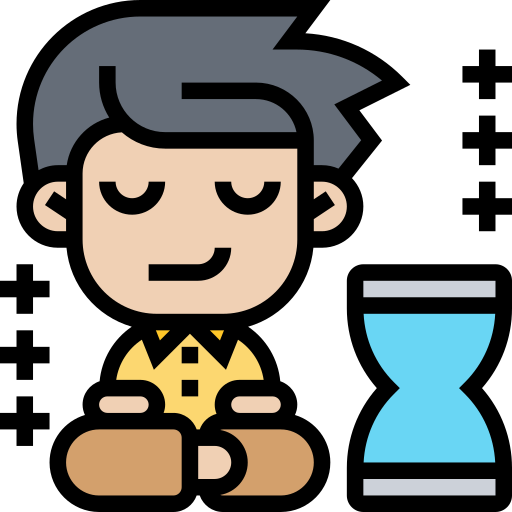
Taking a pause will help both parties:
Avoid emotional outbursts that lead to blurted-out offensive or attacking statements ⟷ The less we attack each other, the wider the door remains open for reconciliation.
Gain time to reflect on the situation from multiple perspectives ⟷ We create space to reconsider our own thoughts as well as part of the other person's perspective.
Step 2 - Sit down and talk with each other
Typically, when conflicts arise between nations, the paramount priority is to keep diplomatic channels continuously open. Because once all dialogue channels are closed, perhaps only weapons and bullets are left to do the talking.

Communication in interpersonal conflict resolution is just as critical. As long as we are still willing to sit down and talk to one another, the conflict still has a chance to be untangled. If we choose silence instead, the conflict will never resolve itself or vanish; it remains right there and steadily grows. Eventually, it will become so massive that it turns into an impassable wall dividing the relationship.
Therefore, after having taken time to regain emotional composure , even though personal egos may still be strong, let us make an effort to restrain ourselves and sit down to talk.
Having that conversation will not be comfortable or pleasant. However, it helps both sides understand each other's viewpoints better. This lays the groundwork for untying the knots and working through the conflict much more effectively.
Step 3 - Find a reasonable path forward together
Finally, after having sat down to talk and understood each other's perspectives, work together to come up with reasonable paths forward to resolve the conflict for both sides.
Naturally, during times of conflict, everyone has their own " justifiable " reasons to defend their viewpoint. However, if we only fixate on our own thoughts and forget the true value of the relationship, finding common ground will inevitably lead to a dead end.
I often address this challenge by asking myself a crucial question: " Do I truly want to maintain this relationship? ".
With just that single question, I grant myself the opportunity to re-evaluate all dimensions of the relationship:
What value has this relationship brought to both of us?
Is the current conflict worth sacrificing this relationship for?
Is there a way to both resolve the dispute and preserve the relationship?
...
After honest self-reflection, if the relationship is truly valuable to both sides and the existing conflict is merely a manageable issue, let us strive to reach common ground.
When each person concedes a little, we might feel like we are giving up certain things, but in return, we preserve the meaningful values of a worthwhile relationship.

Respecting other people's perspectives and straightforwardly acknowledging our own mistakes are essential actions if you genuinely want to sustain a relationship.
Conversely, if after thorough reflection we realize that the relationship brings little value and the conflict is fundamentally too deep to reconcile, then perhaps at that point... letting go is a choice that brings freedom to both sides.
Bottom lines
In life, relationship conflict is inevitable. Yet through emotional management, empathy, and open communication, we can absolutely overcome issues together and build stronger, more sustainable bonds.
I hope that with the insights shared in this article, you will further hone your interpersonal skills and build truly valuable relationships with those around you!
* Images in this article are sourced from Flaticon
Thank you for reading my article!
Kim,