
How to Use Credit Cards Without Falling into a Debt Spiral?
With the growth of the financial industry in general and payment methods in particular, consumer loan products are booming, making it easy for us to buy items beyond our current financial capacity. This ease is a double-edged sword: shopping becomes more convenient, but it is also easier to fall into consumer traps and debt spirals.
Have you ever wondered why taking $20 out of your wallet to pay for a meal with friends feels painful and hesitating, yet spending the exact same amount by swiping a credit card or tapping your phone via Apple Pay feels surprisingly effortless?
The truth is that a credit card is not merely a payment tool. It is a masterpiece crafted by numerous mathematicians and behavioral psychologists at massive financial institutions. They meticulously study consumers' Pain of Paying and find every way to eliminate it. When paying cash, our brain instantly recognizes it as a physical loss. But with a credit card, it separates the act of enjoying from the act of paying , thereby encouraging consumers to spend aggressively without noticing the money they are actually losing.
This system is so sophisticated and sharp that it can carve deep wounds into our wallets without causing any immediate pain. We bring home new shoes and a new phone in high spirits, only for the brutal reality of the new debt figures to hit once the credit card statement arrives and the Dopamine high fades away.
What are the consequences of this comfortable spending feeling? It is a pre-laid trap called Lifestyle Inflation — meaning many of us are living a borrowed life:
-
Borrowing luxury from installment purchases
-
Borrowing comfort from our future self's hard work
-
Borrowing confidence from a card limit that is constantly hovering near empty
When we lose control of the card, we inadvertently enter a spiral of modern slavery : hard-earned salaries flow straight into the banks' pockets, using one debt to pay off another, and living in constant fear whenever the statement closing date approaches.
If we do not truly understand the rules of the game, we will forever remain pawns on the banks' chessboard, working tirelessly not to build our own dreams, but to fatten the banks' skyscrapers. This article is not just about using credit cards safely; it is a strategy to flip the board and transform credit cards from enemies into our most loyal allies on the path to financial freedom.
1. Principles and Conditions
Before using a credit card, there are several principles and conditions we must firmly grasp to avoid falling into debt spirals. If you are not yet disciplined enough to strictly follow the principles and conditions below, I advise you to slow down and build strong self-discipline before holding a credit card in your hand.
a. Know how to spend to avoid getting swept into consumerism
Impulsive spending psychology is the biggest loophole that causes us to fall into debt traps, especially the easy debts of credit cards.
The simplest action we can take to control impulsive spending psychology is for any non-essential item (tech gadgets, clothes, accessories), force yourself to wait at least 72 hours before deciding to make the purchase . Usually, after enough time passes, the level of Dopamine (the shopping excitement hormone) subsides, giving us a more rational perspective to realize whether we truly need that item so badly, thus avoiding impulse purchases of useless items.
I have written a dedicated article on this topic ; please refer to it and build your own personal shopping psychology control system.
b. The "Buy only when you have the money" principle
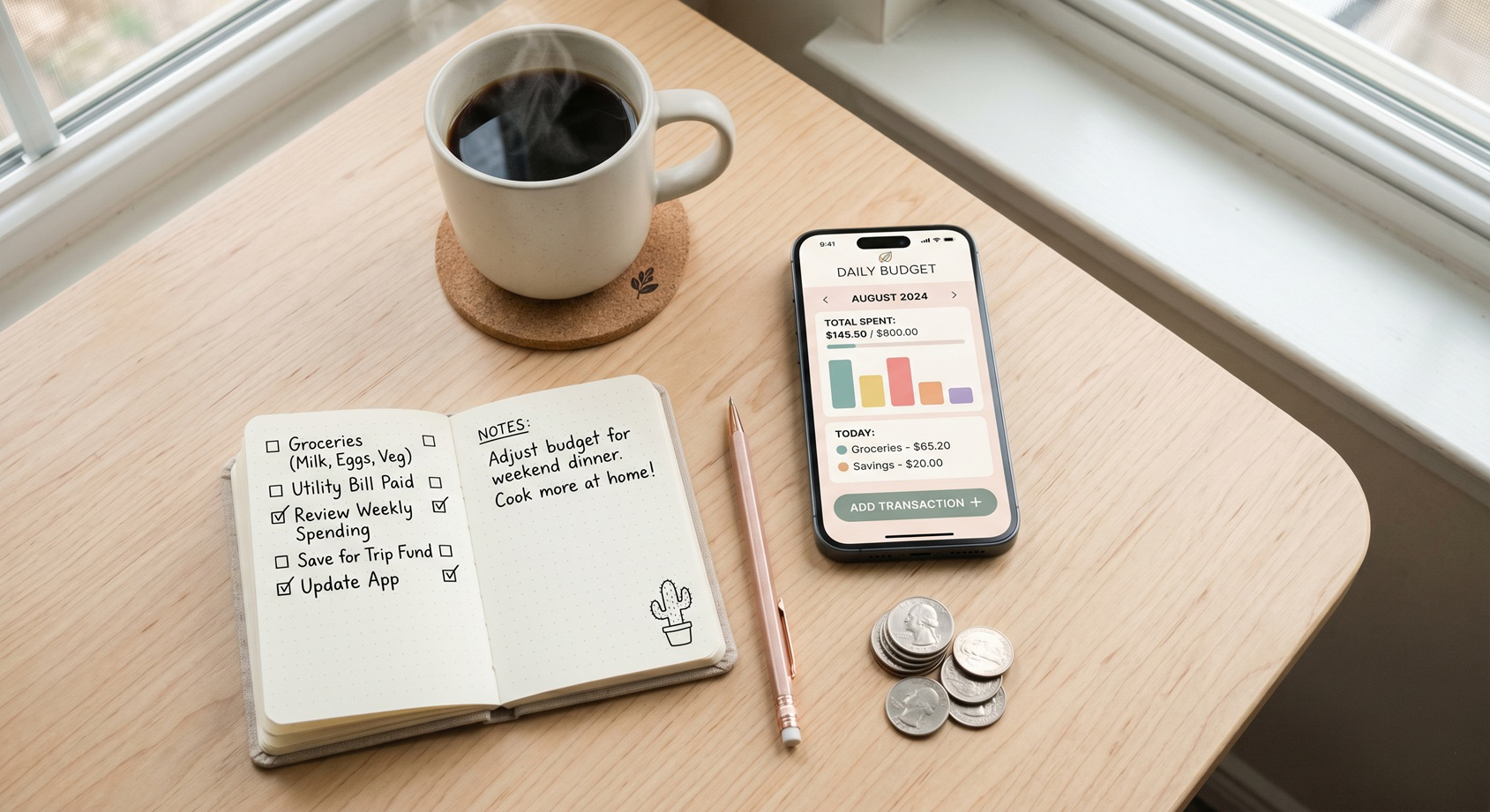
This principle is very simple: Only swipe your credit card when you already have the corresponding amount of cash in your account .
Never swipe your card based on "expected income" (for example, spending in advance while waiting for next month's salary/bonus, or waiting to collect a debt from someone to cover it). If you do not have enough cash in your wallet/account to buy the item immediately, consider yourself unable to afford it via a credit card!
c. The "Pay total balance only" principle
Credit cards always offer an installment option — for instance, when buying a smartphone worth $800, you only need to pay a minimum upfront amount of $120 and pay the remaining $680 in installments over subsequent months.
In reality, when opting for installments, you will have to pay an extra fee to the bank (10–25% of the original price) and bear the risk of penalty fees (often 150% of the loan interest rate) as well as a credit score deduction if you pay late. Banks thrive on people who only pay the minimum amount and especially those who are late on installment payments, so we must become their "unprofitable" customers.
Therefore, upon receiving your statement, completely ignore the "Minimum Payment" or "Installment" figures and pay only the exact line stating "Total Statement Balance" (100% of the spent amount) .
And if one month you encounter a major crisis and cannot pay off 100% of the debt, stop using the card immediately until the principal is fully paid off, preventing compounding penalty interest from eroding your entire wealth.
d. Manage card limits and the number of cards
Finally, equally important is managing credit cards, especially for those holding more than one card:
First, decline offers to increase credit limits or open new cards if there is no real need and periodically review the credit cards you are currently using . This saves a significant amount in annual card maintenance fees and isolates yourself from consumer traps.
Second, view your card limit as borrowing capacity, not as personal wealth . A higher limit indicates strong financial standing, but it is also a sign that the bank has sniffed out massive amounts of money they can extract from you if you make unwise decisions.
Always remember that the more cards and higher limits you have, the looser the financial noose becomes as it waits for you to stumble.
2. How to Use Credit Cards Correctly
To optimize credit card usage, follow these steps:
Step 1: Synchronize cash flow mismatches
This is a crucial step to ensure we always have cash ready when it is time to settle our credit card balance. Here is how:
-
Check your fixed monthly payday.
-
Contact the bank and request to adjust your Statement Closing Date such that the Payment Due Date (usually 15–25 days after the Statement Closing Date ) falls 1 to 2 days right after your Payday .
Example : I use a credit card with 45 interest-free days. My Payday is on the 5th of every month, so I request the bank to set the Statement Closing Date to the 23rd of each month. This ensures the Payment Due Date falls on the 7th or 8th of the following month. This way, the credit card balance is paid right after my salary arrives, eliminating the risk of spending all my salary before clearing bank debts.
To better understand, take a look at the table below:
| Transaction Date | Date Type | Notes |
|---|---|---|
| 24/04/2026 | Start of new cycle | Purchased an item worth $40. Being at the start of the cycle, this transaction enjoys a full 45 interest-free days (from Apr 24 to Jun 07). |
| 13/05/2026 | Mid-cycle | Purchased an item worth $80. Only about 25 interest-free days remain (from May 13 to Jun 07). |
| 23/05/2026 | Statement closing date | Bank closes total statement at $120. If an item is bought on this exact date, only 15 days remain to pay (until Jun 07). |
| 05/06/2026 | Payday | This is the day salary arrives in the account. |
| 07/06/2026 | Payment due date | Deadline to pay the full $120 to avoid interest. Since it falls 1–2 days after payday, salary can easily be used to settle the balance immediately. |
However, in practice, many banks do not allow changing statement closing dates. Therefore, always remember a core principle: you must have enough funds to settle the full credit card balance before the final payment deadline .
Step 2: Manage spending and leverage "borrowed" cash flow from credit cards
Here is how to transform consumer debt into a small yet persistent investment:
-
Open a flexible savings account (or digital high-yield pocket) on your banking app (one that allows withdrawals at any time while earning daily interest at around 3–6%/year).
-
Maximize credit card usage for monthly spending (however, I advise prioritizing essential expenses only; read this article to build your personal spending psychology control system).
-
Every time you swipe your credit card, immediately transfer the exact amount spent from your salary account to the opened flexible savings account .
-
When the payment due date arrives, withdraw the total accumulated funds in the flexible savings account to pay off 100% of the credit card balance.
Using a credit card this way provides 3 distinct benefits:
-
Zero installment fees or late interest charges, as the entire credit card balance is always paid on time using money already set aside in the flexible savings account. You can see that combined with Step 1 , this method builds a two-layer defense system. Even if you do something foolish with the money in your flexible savings account, you can still cover any missing credit card payment using the salary you received just 1–2 days prior.
-
Boost your credit score because balances are consistently paid on time ➝ Later, when needing a mortgage or business capital, loans are easier to secure at below-average interest rates.
-
Earn extra monthly savings interest by keeping spending funds in flexible savings during the period before statement settlement. Though not enormous, done consistently over a long period, these accumulated savings become substantial.
If you are quick-witted and capable of earning returns from short-term investments, you could leverage this "borrowed" capital from credit cards for 20–45 days for your investments. However, investing always carries risk, whereas the paramount mission of this capital is not high returns, but settling credit card debt on time. Therefore, I still recommend depositing this "borrowed" credit card money into flexible savings. Though interest earned is modest, it is safe, allowing us to settle debt on time and avoid unnecessary financial risks.
Bottom lines
As you can see, a credit card is not a reward from banks for your wealth; it is a test of financial discipline. Top financial experts do not get rich off a few tens of dollars in savings interest from capital leverage; they grow wealthy through the ability to delay gratification — a core quality that managing credit cards trains in you every day.
True freedom lies not in massive credit card limits or luxury items to show off. It lies in peace of mind every night, knowing we owe no one anything, and everything we own truly belongs to us, not to the bank.
Remember that:
-
Discipline is freedom : When we control the card, we control our life.
-
Systems matter more than willpower : Do not trust your own alertness when facing temptation; trust systematic guardrails — the only thing keeping you in control of the game with banks.
-
Small money yields big achievements : Leveraging "borrowed" cash flow may not make you rich overnight, but it is the first brick in building the mindset of a true investor.
Do not let yourself be prey in a game where you can completely become the master. Turn your credit card into a powerful assistant supporting you in optimizing cash flow and building your own financial future.
➝ Continue reading articles in the personal finance series to conquer the journey to financial freedom!
Thank you for reading my article!
Kim,