
Guide to Business Analysis
Following up on the series on investment topics (especially the Value Investing Method ), I will share the approach I frequently use to select companies with strong fundamentals.
For me, a good company is one that must satisfy the following 3 requirements:
-
The company's business model must be profitable
-
The company must have strong financial health to execute its business plans
-
The company's profits must belong to the shareholders (especially minority shareholders)
And to filter out companies that meet these 3 requirements, I use the following 5 criteria to evaluate a business:
"The purpose of these 5 criteria is to eliminate junk stocks. Once all junk stocks are filtered out, the remaining portfolio will consist only of safe stocks worthy of investment consideration. If our analysis is correct, these stocks will yield sustainable profits. If wrong, their price decline is usually insignificant, not plummeting steeply like poor-quality stocks. The key is to control risk right from the selection stage rather than chasing false expectations of low-quality stocks."
Now, let's dive into each criterion!
1, Business Model & Future Outlook
The essence of investing is buying a company's future. That is, when we invest money into a business, we expect that business to perform well and generate profits for us in the future.
So how do we determine whether a business has a good business model and can make a profit? - To answer this question, there are 2 aspects we need to evaluate:
-
Evaluate past operational performance by reading Financial Results in periodic financial reports
-
Forecast future prospects through Industry Analysis and Company Analysis
a, Financial results
The purpose of reading financial statements is to understand a company's past and present business operations. From that data, we can partially project the company's future.
A company with a good business model is one where Revenue and Profit from core business operations grow consistently . We can inspect these factors by reviewing:
Financial results from the most recent years
Financial results from the most recent quarters
Average profit margin
Each industry and company has a different business model and story, so there is no universal evaluation framework applicable to all businesses. However, there is one common principle we must keep in mind: revenue and profit must genuinely come from the company's core business activities .
***
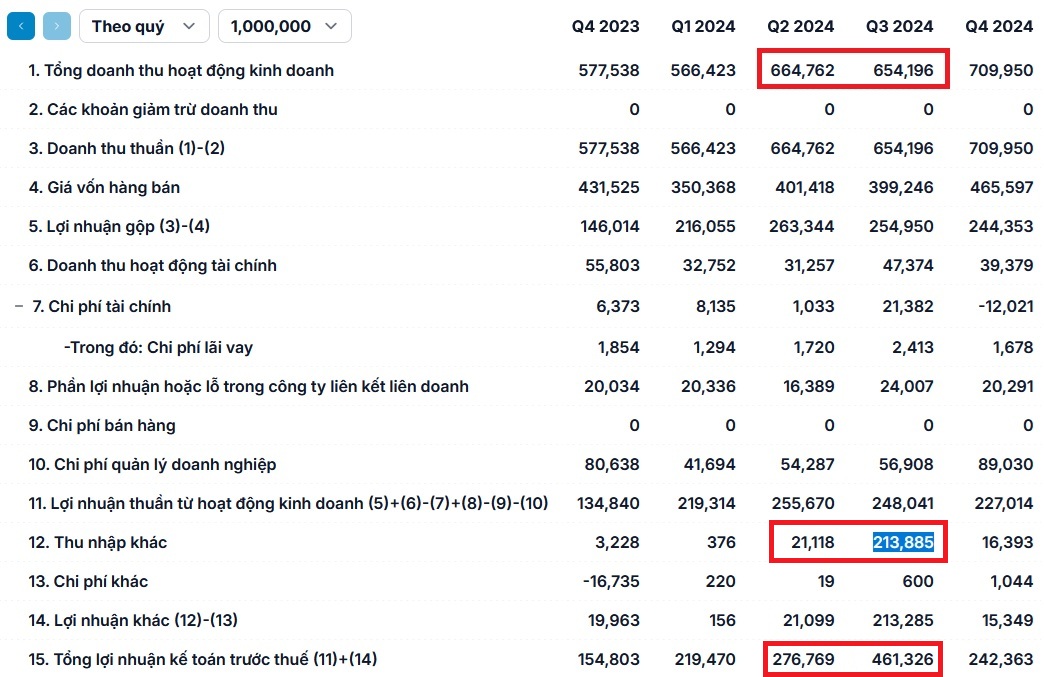
Example: In the financial results below, we can see that Q3-2024 net profit spiked dramatically, but it came from an item outside the core business operations. If we subtract other income from net revenue or total profit , we can see that profit from core operations ( gross profit ) in Q3 was actually lower than in Q2.
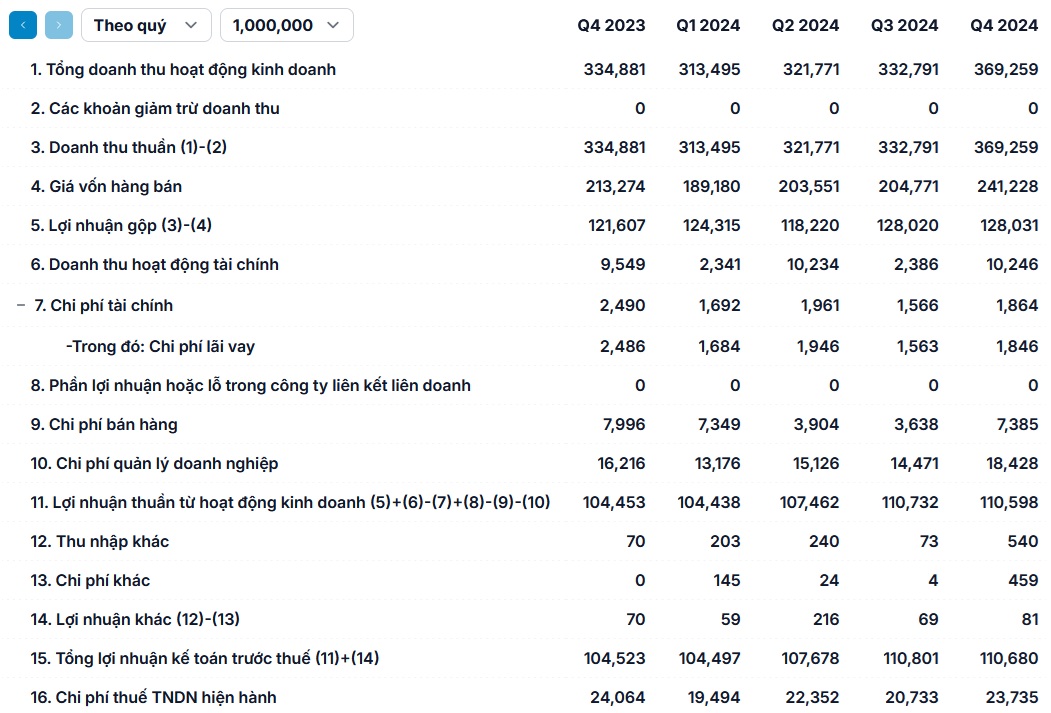
And here is an example of a company whose financial results grew thanks to core operations, with both net revenue and gross profit increasing. Other expenses and income remained at very low levels with minimal fluctuation.
You can see more examples in the business analysis posts in my personal investment portfolio .
b, Industry analysis
After analyzing financial results and knowing that the company operates efficiently and generates profits from core operations, we must answer the next question:
Will the company continue to maintain profit generation in the future?
To answer the above question, I usually analyze top-down—starting from the broad macroeconomic picture, then gradually narrowing down to industries, sectors, and finally specific companies to make investment decisions.
Generally, if an industry is supported by macroeconomic tailwinds and has a growth trend in the future, companies operating in that industry tend to perform well . Therefore, besides learning about the company, always stay updated on various industries/sectors, including:
Future trends of each industry/sector (Is it supported by macro dynamics?)
Advantages and characteristics of each industry/sector (Is it sustainable? Is it cyclical?)
To gain more insights into future industry trends, here are a few suggestions:
Stay informed with daily social news and trends
Notice changes in society around you (e.g., when shopping, what are people buying, what is trending, what is getting cheaper, what is getting more expensive...)—many investment ideas originate from observing daily societal movements.
Refer to research articles from reputable providers. YouTube, Forbes magazine, etc., are also places where I often look for insights.
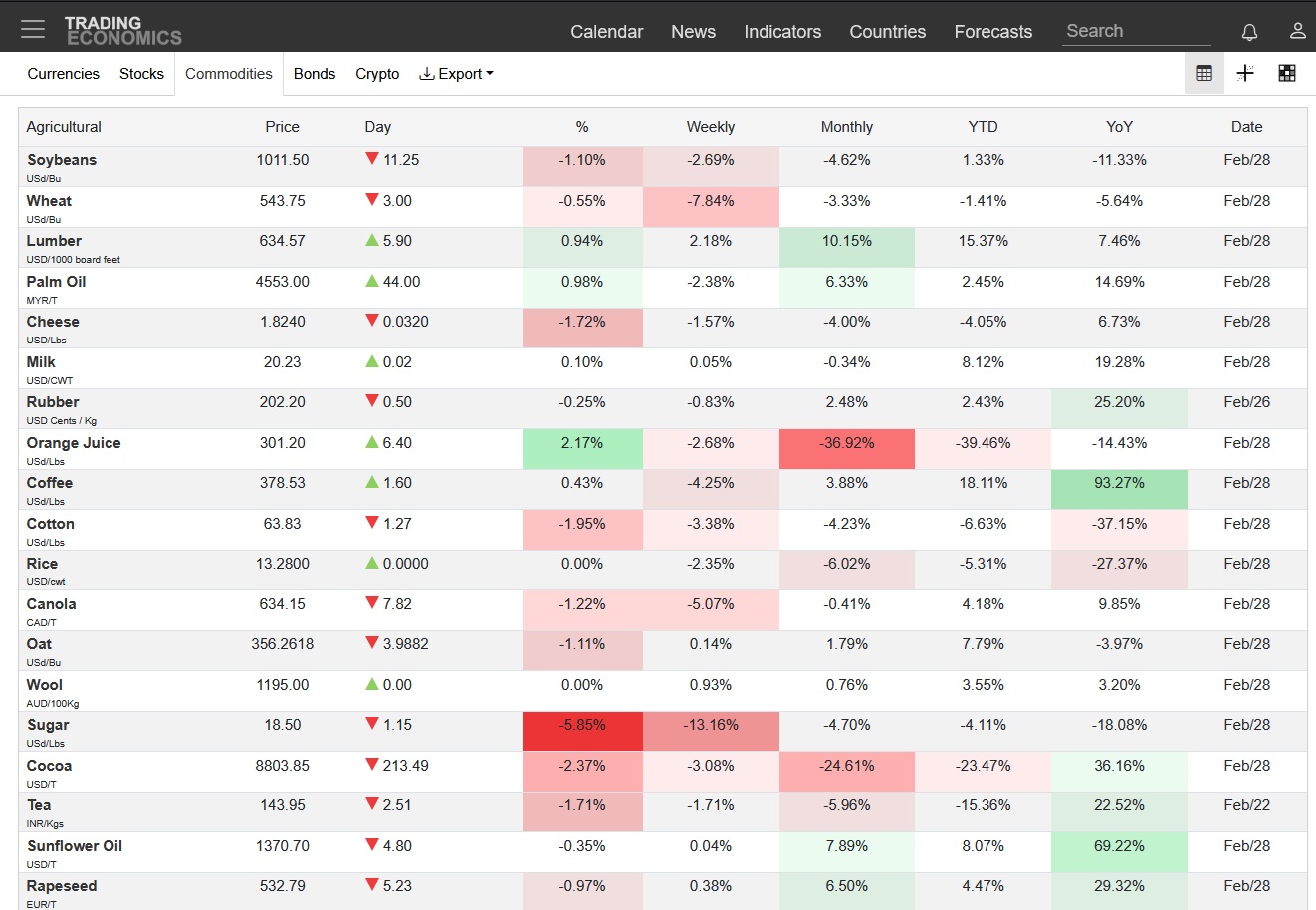
I often check commodity prices and forecasts on Trading Economics .
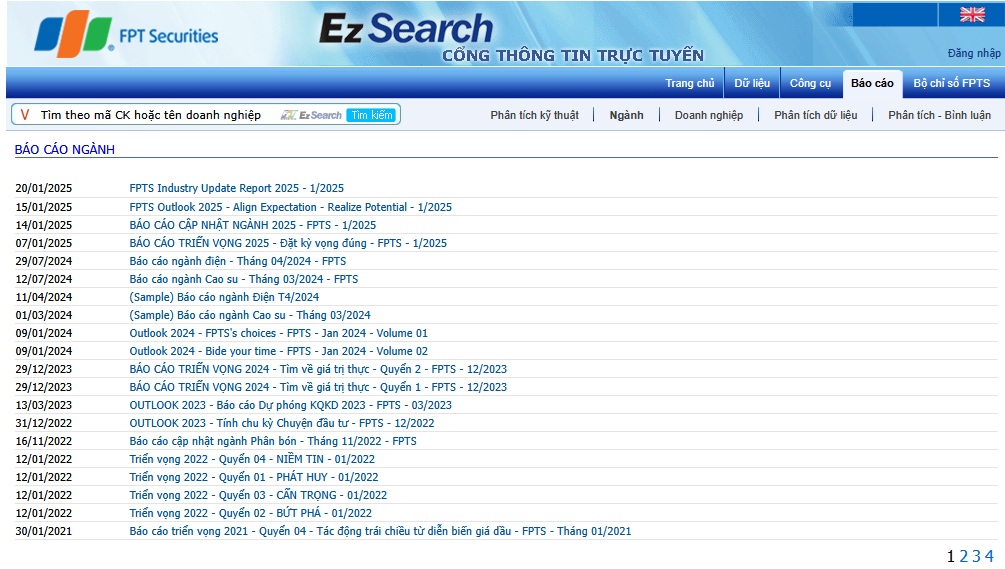
FPTS Industry Reports are also high-quality reports that we can reference for further insights.
c, Company analysis
Once we identify a company with a good business model operating in a macro-supported industry, we need to analyze its future prospects further through 2 aspects:
Company strengths (Competitive advantages)
Key considerations (Potential risks the company may encounter)
Analyzing future prospects depends heavily on the analyst's experience and perspective. The more knowledge you have about the company's industry, the sharper and more accurate your analysis will be.
For those with less experience, initial analysis can be challenging. However, to make this process easier, here are several types of companies to consider:
-
Companies with work-in-progress assets about to be commissioned - These companies have potential to boost core revenue and profit by bringing new assets into production/business. Companies with assets scheduled to operate within 6 months to 1 year are particularly noteworthy. Conversely, if work-in-progress assets take over 2 years to be commissioned, exercise caution as the exact operational timeline remains uncertain.
-
Companies benefiting from macroeconomic policies - This group has strong growth prospects thanks to support from macroeconomic policies. When favorable policies positively impact the business sector, revenue and profit can break out in the future.
-
Companies recovering after a downturn or cycle trough - These businesses operate according to economic or commodity price cycles. As the economy or commodity market passes the trough, the company has likely overcome its hardest period. Consequently, revenue and net profit can improve as the economy or commodity prices enter a growth phase.
-
Companies successfully restructuring their business model - These companies previously operated inefficiently or stagnated without growth. However, due to strategic management and business model changes, core revenue and profit have shown clear improvement in the past two quarters, unlocking sustainable growth prospects.
Each company has a unique story, so providing a single example for this section is difficult; you can refer to my perspectives in my personal investment portfolio .
2, Financial Health
Many companies have great business models but overly weak financial structures (such as heavy debt). When a "black swan" event occurs (like Covid-19), the company cannot defend against unexpected risks and falls into distress because it lacks financial resources to sustain its business model through the crisis.
Therefore, having a good business model is a plus, but whether the company has the financial resources to maintain that business model in the future is another question we must answer.
a, Signs of a company with strong financial health
Below are characteristics of a company with a strong financial structure and sufficient resources to execute its business plans:
-
Cash reserves (typically including Cash , Cash equivalents , and Short-term financial investments ) are well-balanced against debt
Low debt or debt that is rapidly decreasing
Inventory and Accounts Receivable do not spike abnormally
Accounts Receivable and Accounts Payable maintain a balanced ratio
***
The example below illustrates a company with good asset quality:
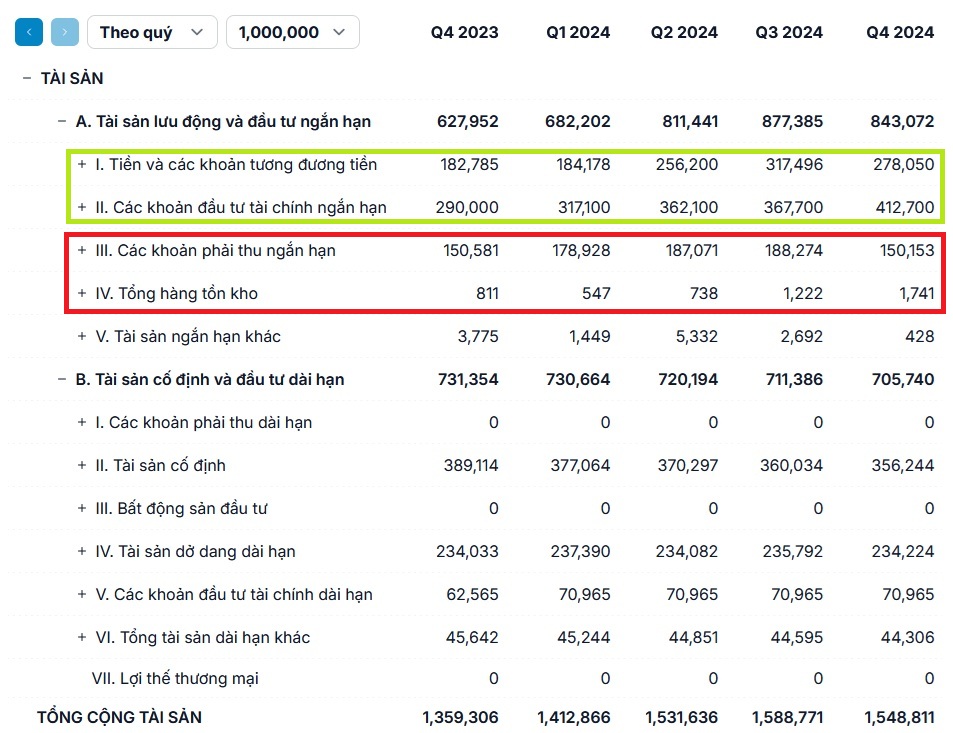
Cash and cash equivalents (including short-term financial investments like bank deposits) remain at high levels
Accounts receivable are low and steady without spiking (indicating a stable business model)
Inventory is low (proving strong market demand for products)
Fixed assets decrease steadily as the company has ample cash to depreciate regularly
Work-in-progress assets show the company is constructing a factory about to operate → Growth potential in future revenue and profit
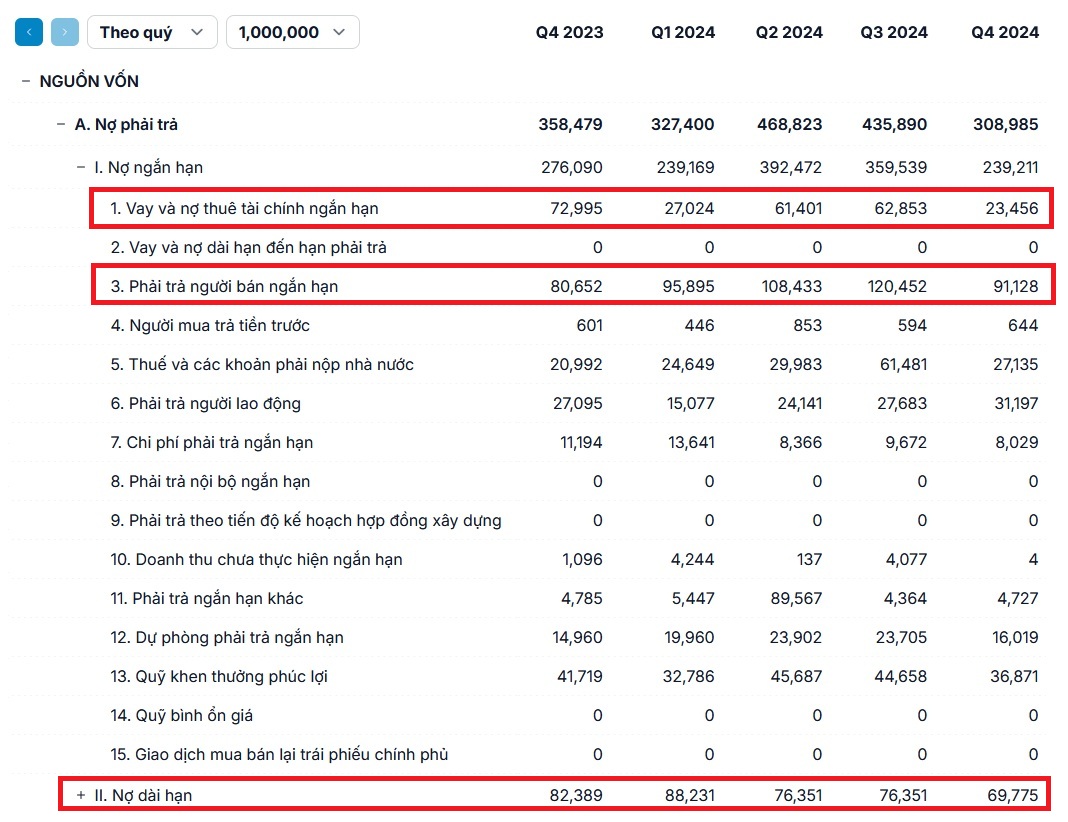
Moving on to liabilities and equity, we can see:
Short-term debt is very low compared to cash (seen in assets above)
Long-term debt is also very low compared to cash (seen in assets above)
Accounts payable balance with accounts receivable (proving the company leverages vendor capital effectively)
b, Signs of a company with weak financial health
Above I listed characteristics of a company with strong financial health. Inverting those characteristics reveals a weak financial structure:
Cash reserves are excessively low compared to interest-bearing debt
Debt significantly exceeds Cash reserves and exhibits a strong upward trend (Debt/Cash ratio > 2)
Accounts receivable increase abnormally fast (indicating failure to collect cash from customers)
Inventory increases abnormally fast (indicating inability to sell products)
If a company exhibits 2 or more of the above negative traits, we must evaluate it with extreme caution (in my view, it's best to monitor rather than invest in such companies) .
***
The example below shows a company with poor asset quality:
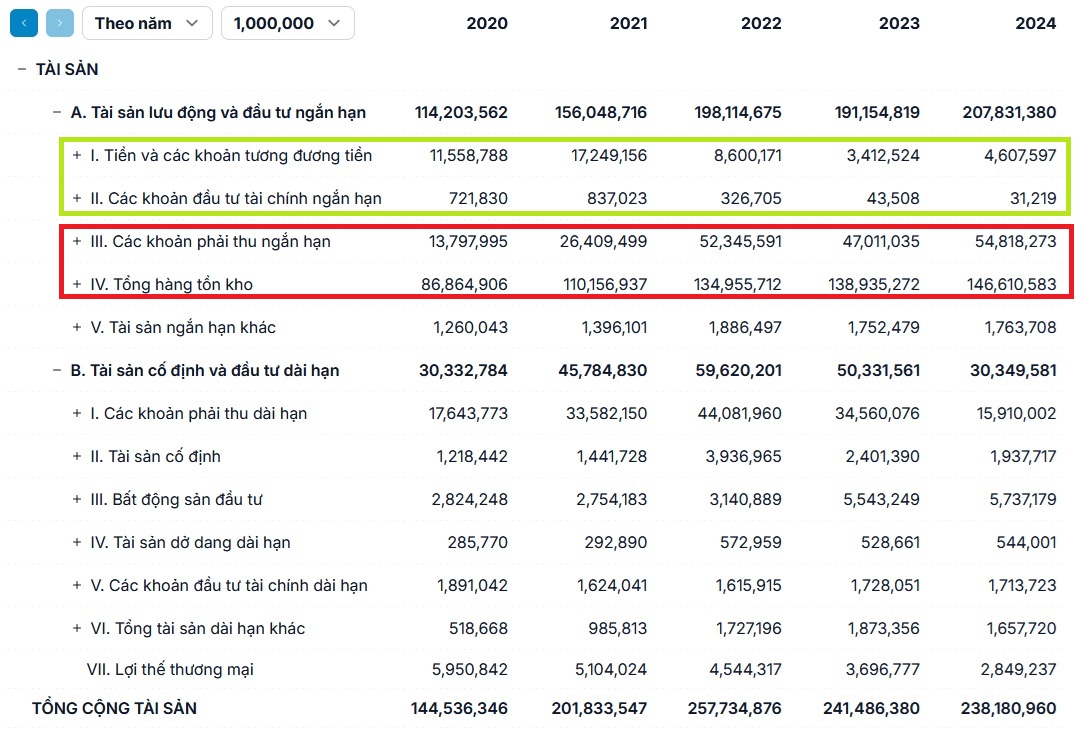
Cash and cash equivalents (including short-term financial investments like bank deposits) are low relative to debt (image below)
Accounts receivable grew aggressively over several years (showing capital lockup and uncollected funds)
Inventory spiked (not inherently a risk alone, but when combined with surging receivables, it indicates unsold output)
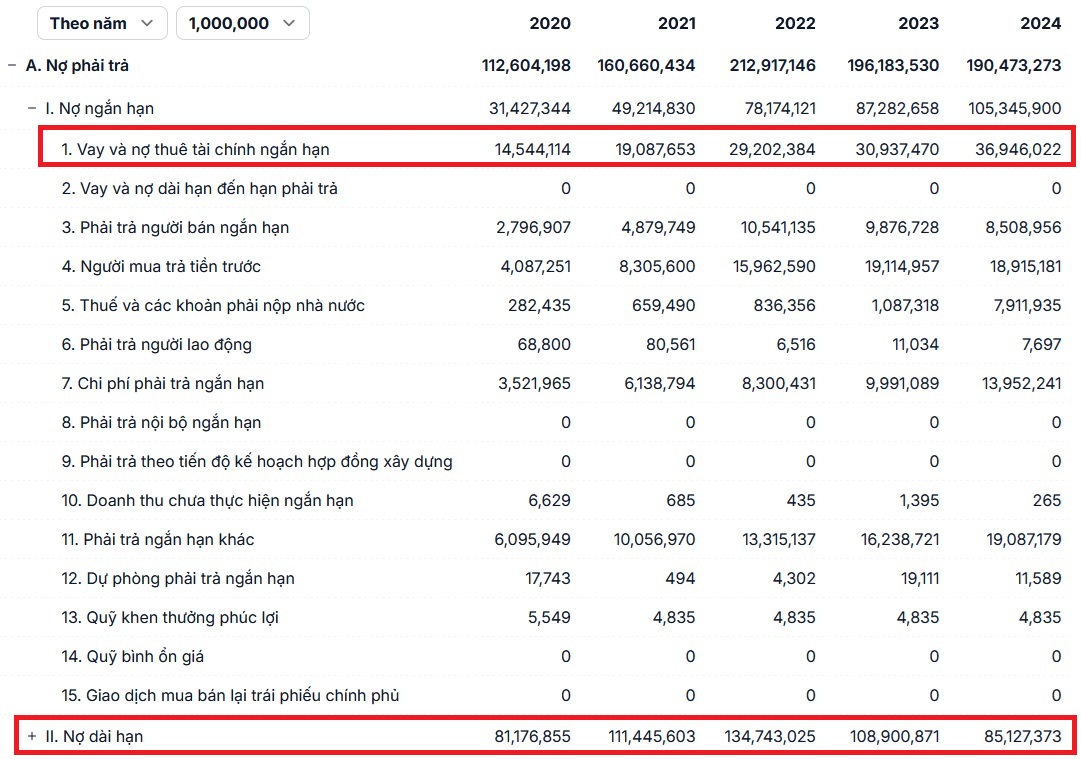
Next, for capital structure:
Short-term debt is very high relative to cash (seen in assets above)
Long-term debt is also very high relative to cash (seen in assets above)
Accounts payable are completely out of balance with accounts receivable
***
Another example showing a risky financial structure to avoid:
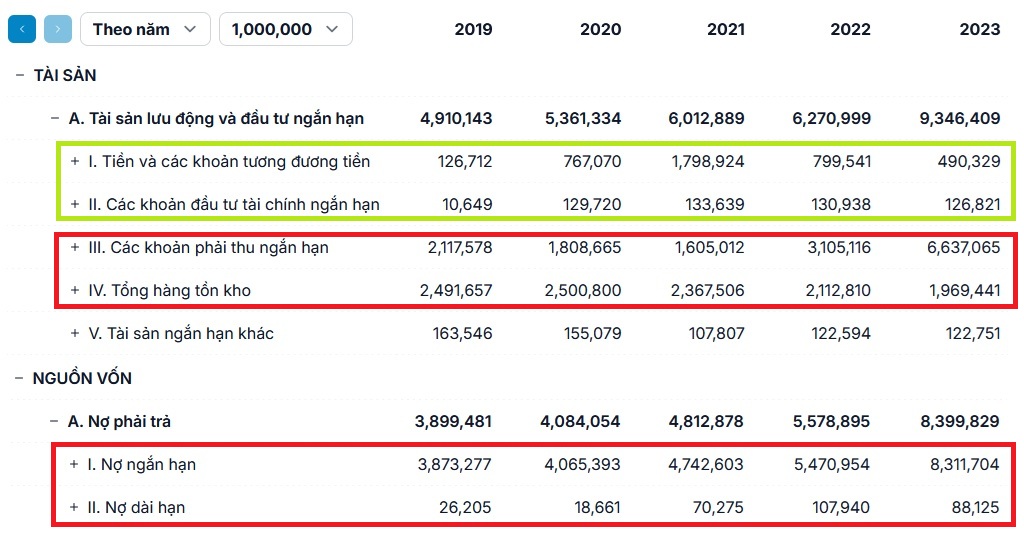
Cash reserves are small and declining rapidly
Debt is very high relative to cash and rising sharply
Accounts receivable are surging
Companies with weak financial health can easily fall into jeopardy with just one adverse business event. Therefore, it is best to stay away regardless of how attractive or profitable the business model appears. Observe patiently and only consider investing when financial condition improves. By then, even if returns are lower than entering early, risk is significantly reduced, making the investment safer and more sustainable.
3, Shareholder Structure and Management
This is the most critical criterion to evaluate when investing in a company . As retail investors—the most vulnerable participants in financial markets—we must pay special attention to this criterion.
Major or minor shareholders are all owners of the business—sharing both rewards and risks. We cannot invest in a company with a great business model generating huge profits if not a single dollar of profit is distributed to us while going straight into the pockets of a greedy management group. Not to mention some unscrupulous management teams who push the brunt of risk onto retail shareholders when difficulties arise.
Among all criteria to evaluate a company, human integrity is the hardest to judge . People change over time—no single method can comprehensively evaluate management ethics. However, below are characteristics to help project management behavior:
a, Counterbalancing power in shareholder structure
A company whose shareholder structure possesses counterbalancing power (meaning no single group holds absolute control) will maintain internal balance of power. Consequently, management decisions and actions become more transparent, responsible, and aligned with all stakeholders' interests.
Below are characteristics of a balanced shareholder structure:
2 to 5 independent major shareholder groups
State ownership as a major shareholder is a big plus—while state-owned entities can be somewhat slow and unambitious, they protect minority shareholders exceptionally well by consistently demanding cash dividends.
Major shareholders who are customers, suppliers, or key business partners of the company
If a company has all these factors, it is considered an ideal shareholder structure, governing the business effectively and minimizing ethical risks and management abuse of power.
***
Example: Below is a shareholder structure with counterbalancing power:
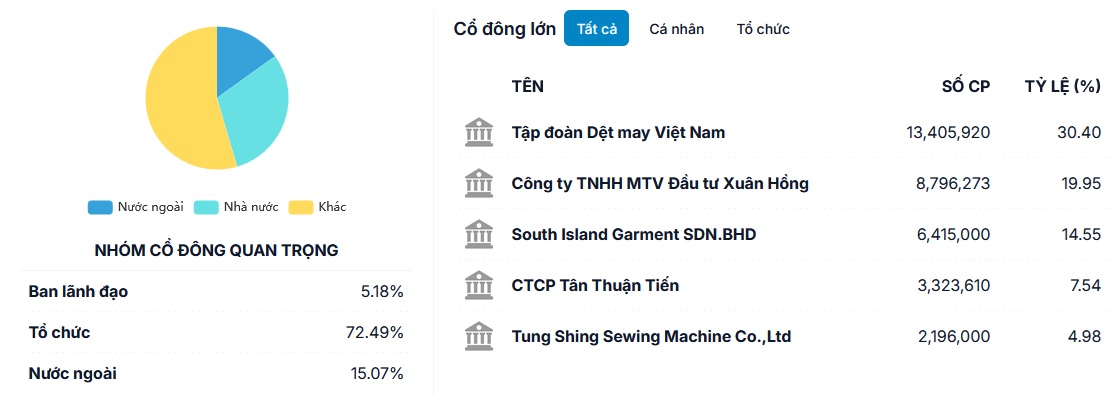
More than 2 independent major shareholder groups
State as a major shareholder—protecting retail investors by requiring cash dividends
Foreign major shareholder is a key customer of the company
Example: Below is a shareholder structure lacking counterbalancing power:
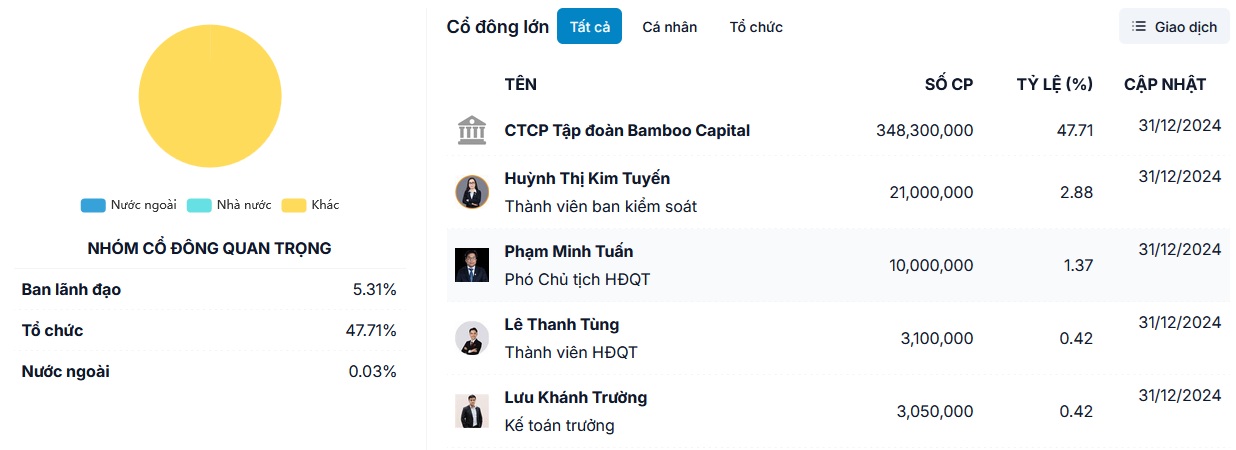
For single-majority shareholder structures like this, we must evaluate whether the sole controlling group truly aligns interests with retail shareholders.
b, Management's past track record
Another aspect to evaluate management is observing what management did in the past and expecting them to continue doing so in the future .
For example, if management has consistently shared profits with retail shareholders for many consecutive years by distributing dividends, we can trust them to continue paying regular cash dividends if the business remains profitable.
Below is an example of that type: although the company lacks a counterbalancing shareholder structure due to a single controlling group, it has paid consistent cash dividends to all shareholders for years without capital lockup. This allows us to trust that management aligns interests with minority shareholders.
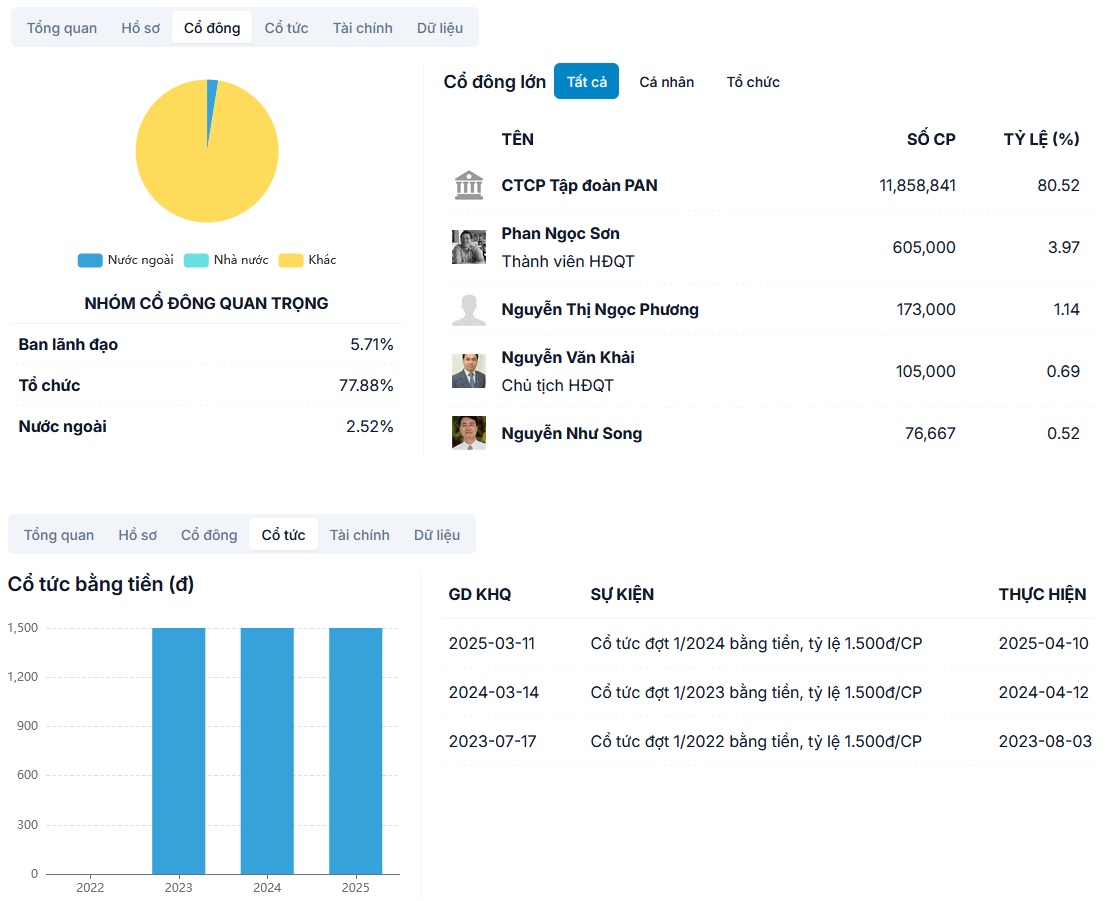
Additionally, we should read meeting minutes, Annual Reports , Corporate Governance Reports , Board Resolutions , and Periodic Financial Statements to understand management's ambition, motivation, and actions.
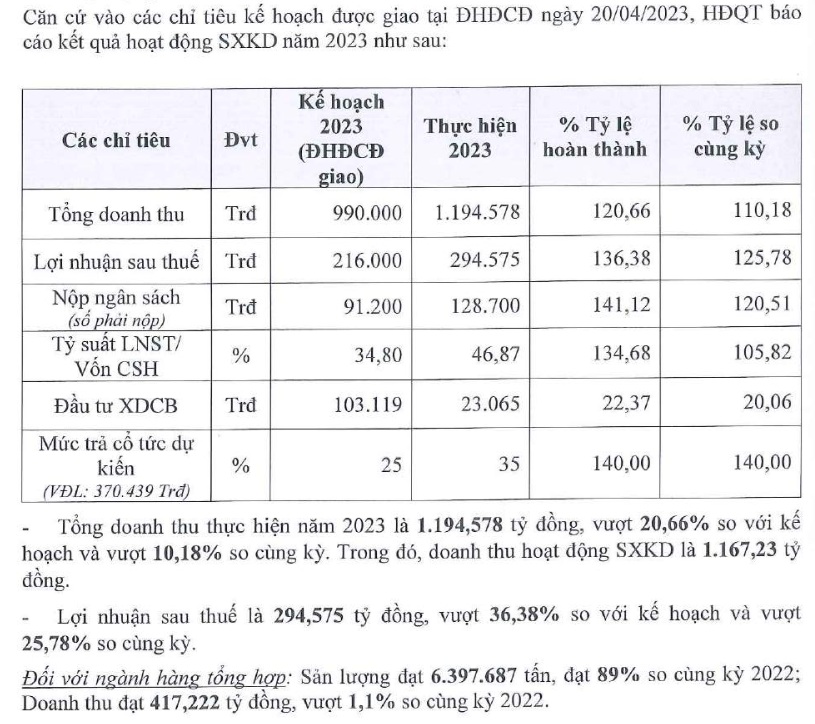
If management speaks little and delivers much, setting realistic business plans (ideally with revenue and profit growth) and achieving approximately targeted figures (90% ~ 120%) over an extended period, that is a truly competent management team.
c, When can we overlook management criteria?
This criterion can only be overlooked if we possess enough capital to hold controlling power and dictate management decisions. Conversely, if we remain retail shareholders without influence over management decisions, this criterion must never be ignored.
4, Profit Distribution Policy
Always keep one critical rule in mind:
"Only when a company pays cash dividends do its profits truly belong to the shareholders."
As stated earlier, as shareholders, we are owners of the company. That means profits generated by the company must belong to us.
An investment-worthy company is one with a fair profit distribution policy and, most importantly, where profits are ultimately paid to shareholders—the true owners of the business.
Therefore, do not forget to read the profit distribution section in Board Resolutions ( usually found in Annual General Meeting documents ) to check whether management commits to acting in shareholders' best interests.
Key items to note in profit distribution policy include:
-
Reward and Welfare Fund (including Board & Executive bonuses) - This portion of profit does not belong to shareholders . Be wary of companies allocating >10% of net profit to reward and welfare funds (meaning 10% of post-tax profit goes to a small group of executives/board members rather than all shareholders).
-
ESOP Policy (Employee Stock Ownership Plan) - Various forms of ESOP exist, but all share one truth: ESOP only benefits insiders, not shareholders . It dilutes shares and reduces existing shareholders' ownership percentage. I personally dislike ESOP, so I only tolerate an ESOP ratio of under 3%.
-
Investment and Development Fund - This is retained profit used to reinvest in business expansion . Although not paid directly to shareholders, retaining funds for development indirectly benefits shareholders if capital is deployed efficiently to boost future profits.
-
Dividends (Cash Preferred) - This is the profit distributed directly to shareholders . Dividends come in various forms, but I always prefer cash dividends because that is when profits truly belong to shareholders.
***
Below is an example of relatively reasonable profit distribution:
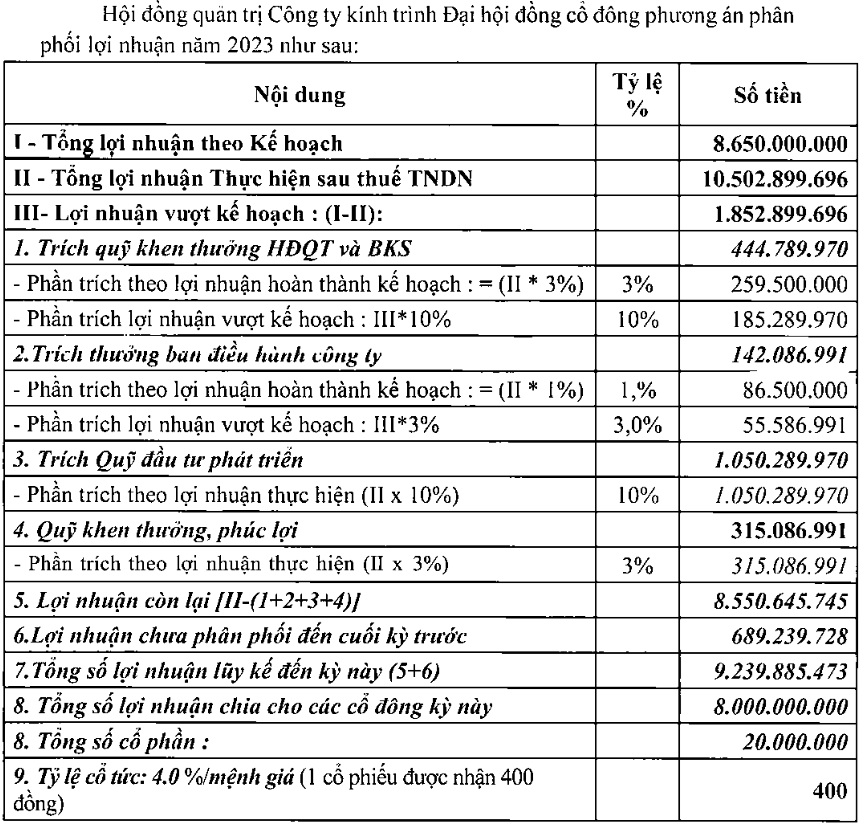
Net profit exceeded planned targets
Total Reward and Welfare Fund was 18% (slightly high, but acceptable given strong management execution and alignment)
Investment and Development Fund was 10%
Cash dividend was 80% (including retained earnings from previous periods)
5, Business Valuation
After selecting a company that meets all criteria in previous sections, our final step is determining the entry timing for investment.
So when can we invest in a company? - In my view, we can start investing in a company when its market capitalization is discounted by 20% or more below its intrinsic value .
To determine intrinsic value, we must perform business valuation. Multiple valuation methods exist, and choosing one depends on the type of business ( you can explore this further online as many resources exist ):
For asset-heavy companies (real estate, quarries, mining, etc.), use asset-based valuation methods (RNAV).
For manufacturing or trading companies with stable cash flow, use relative valuation methods (P/E, P/B, EV/EBITDA) or discounted cash flow (DCF).
We can also combine multiple methods and weight them to derive a final valuation.
Although many valuation methods exist, I most frequently use Forward P/E to value a business , following these specific steps:
-
Forecast net profit after tax for the next 1–3 years = Company Analysis
-
Calculate profit truly belonging to shareholders = Projected Profit (1) - Reward & Welfare Funds
-
Discount future shareholder profit (2) to present value (read more about discounting )
-
Evaluate the company's Forward P/E ratio (this metric depends on the industry/company)
-
Multiply Forward P/E (4) by discounted shareholder profit (3) to obtain intrinsic value
***
Example: Below is how I value a business that matches all my criteria (stable future outlook, strong financial health, good shareholder structure):
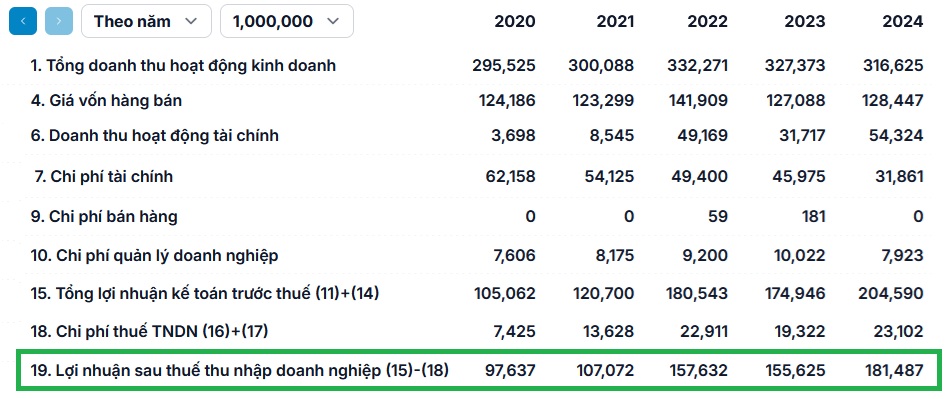
Annual Financial Results
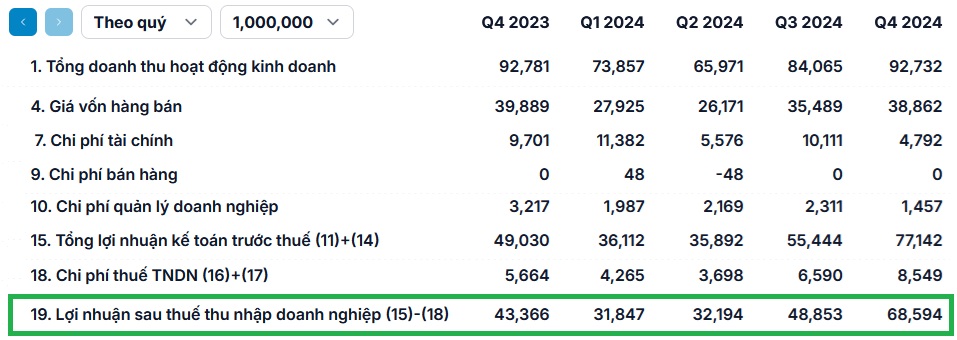
Quarterly Financial Results
This company generates fairly consistent operating profit with slight growth. Based on financial reports and my analysis, I project net profit after tax over the next 3 years to average ~$1.54 million (40 billion VND) / quarter, or ~$5.77 million – $6.54 million (150–170 billion VND) / year.
According to board resolutions on profit distribution, 10% of net profit (~$577,000 / 15 billion VND) is allocated to reward and welfare funds. Since this money does not belong to shareholders, I deduct it from projected profits, leaving actual shareholder profit at ~$5.0 million – $5.77 million (130–150 billion VND) / year (= Projected NPAT - Reward & Welfare Funds ). Discounting these future cash flows to present value yields ~$4.42 million – $5.19 million (115–135 billion VND) / year.
The company operates in a defensive industry with steady growth under 7%/year, so I assign a Forward P/E of 9–10. Thus, intrinsic value ranges from ~$44.23 million – $51.92 million (1,150–1,350 billion VND) (= Discounted Shareholder Profit * Forward P/E ).
With the intrinsic value calculated above, if the company's market cap falls below ~$40.38 million / 1,050 billion VND (≤ 80% * Intrinsic Value ), we can begin investing. As market cap approaches intrinsic value at ~$50.0 million (1,300 billion VND), we gradually reduce position size (review the article on Value Investing Method to understand this strategy).
You can explore more valuation examples in my personal investment portfolio .
Bottom lines
Analyzing a company before investing is a critical step that helps investors make informed decisions and minimize risk. In this article, I outlined five key criteria I regularly use to evaluate and analyze businesses:
-
Analyzing financial results and future outlook helps evaluate growth potential.
-
Analyzing financial health ensures the company has a solid financial foundation to operate and expand long-term.
-
Analyzing shareholder structure and management ethics determines whether leadership is transparent, visionary, and prioritizes shareholder interests.
-
Analyzing profit distribution policy reveals how the company balances reinvestment for growth against returning profits to shareholders.
-
Valuing the business is the final step to evaluate whether current stock price is reasonable relative to intrinsic value.
By combining these analysis methods, we gain a comprehensive view of a company to make sounder, more effective investment decisions. While no single formula guarantees absolute success, equipping yourself with knowledge and a systematic evaluation framework will increase your odds of achieving sustainable stock market returns.
Wishing you successful investing 🎉
Kim,